Thomas Sankara: The African Revolution That Was Murdered by His Best Friend
Video Content: Watch below.
Remarkable Africans · The ones who changed the rules
Thomas Sankara: The African Revolution That Was Murdered by His Best Friend
He came to power in a coup, renamed his country Burkina Faso, attacked corruption, pushed mass vaccination and literacy, championed women's rights, confronted foreign debt and told Africans they should stop waiting for other people to develop them. Four years later he was dead. The man who took power after his murder was his closest political ally.
Thomas Sankara's story is usually told as a legend.
The young revolutionary. The African Che Guevara. The man who sold the government fleet, rode in a cheap Renault, planted trees, vaccinated children and told the United Nations that Africa should stop borrowing money from the very people who had spent decades exploiting it.
Much of that story is true.
But it is not the whole story.
Sankara was also a military officer who came to power through a coup. His government restricted political opposition, used revolutionary tribunals and tolerated coercion. His Committees for the Defence of the Revolution became instruments of political mobilisation and, at times, intimidation.
He was neither the saint his admirers sometimes describe nor the dangerous Marxist caricature once used against him.
He was something more interesting: a fiercely ambitious African nationalist and revolutionary who attempted, in four extraordinarily compressed years, to remake one of the poorest countries on earth.
Then his closest ally decided that the revolution — and Sankara himself — had to go.
A country called Upper Volta
When Thomas Isidore Noël Sankara was born on 21 December 1949, the country was still French Upper Volta.
It had gained independence in 1960, but independence had not made it rich. Upper Volta was overwhelmingly rural, poor and vulnerable to drought. Government institutions were weak. The military repeatedly intervened in politics.
By the beginning of the 1980s, the country had already experienced several changes of government and coups.
The crucial point is this: Sankara did not emerge from a stable democracy and overthrow it.
He emerged from a political system in which the army had already become the mechanism through which governments rose and fell.
That does not excuse what followed.
It explains the world in which it happened.
The soldier
Sankara entered the army as a teenager and received military training in Cameroon, Madagascar and elsewhere. He was an officer, a paratrooper and, increasingly, a political thinker.
He fought in the brief 1974 conflict between Upper Volta and Mali and became known to younger officers as an unusually serious soldier.
But he was also becoming something else.
A nationalist.
A pan-Africanist.
A revolutionary.
He read Marxist literature, admired figures including Fidel Castro and Che Guevara, and developed an increasingly hostile view of French influence over Africa.
He also developed a relationship that would define the next decade of Burkinabè history.
Blaise Compaoré.
The two men became close friends and military comrades.
The coups begin before Sankara's revolution
Colonel Saye Zerbo overthrows President Sangoulé Lamizana. Another military government takes power.
A group of younger officers overthrows Saye Zerbo. Jean-Baptiste Ouédraogo becomes head of state and the Conseil de Salut du Peuple — the CSP — becomes the new governing structure.
Thomas Sankara is appointed Prime Minister.
That appointment is where the country starts moving rapidly toward confrontation.
Ouédraogo and the conservative wing of the military wanted a return towards pluralist politics and a less radical relationship with France and the existing political establishment.
Sankara and his allies wanted something much more fundamental.
A revolution.
May 1983: Sankara is arrested
On 17 May 1983, Sankara was arrested and removed from office.
The arrest followed months of escalating conflict inside the CSP. The French government was deeply interested in events. François Mitterrand's Africa adviser, Guy Penne, had arrived in Ouagadougou on 16 May.
That timing has been discussed ever since.
There is good evidence that France regarded Sankara with suspicion and that French officials were deeply engaged with Upper Volta's political leadership. There is also a long-standing allegation that France supported the move against him.
But the historical record does not justify simply writing “France ordered Sankara's arrest” as an established fact. The timing is striking; the political relationship was real; the precise chain of command is much harder to prove.
Sankara's arrest produced demonstrations.
Students and supporters took to the streets demanding his release.
And while Sankara was confined, another man began preparing for war.
Blaise Compaoré had escaped to the garrison town of Pô.
There he built the force that would eventually march on the capital.
4 August 1983
Compaoré had around 250 men under his command.
They were trained, armed and politically committed to Sankara's side.
They moved on Ouagadougou.
The regime of Jean-Baptiste Ouédraogo collapsed.
Thomas Sankara became head of state.
The irony is important.
Sankara became president because Blaise Compaoré made the coup that put him there.
The revolution had begun with a military takeover.
And four years later another military takeover would kill it.
The man who wanted to change everything
Sankara was thirty-three years old.
He inherited a country with very little money and very large problems.
His answer was not to wait for foreign investors.
It was to mobilise the population.
His government launched campaigns aimed at education, healthcare, agriculture, infrastructure, women's rights and environmental protection.
It was extraordinarily ambitious.
He changed the country's name
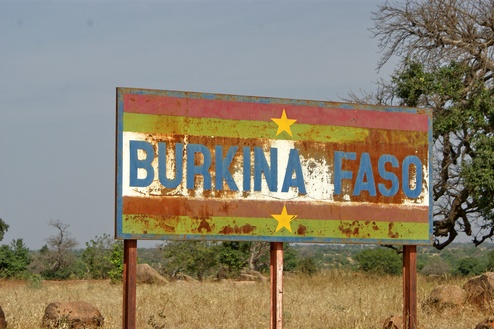
On 4 August 1984, the first anniversary of the revolution, Upper Volta became Burkina Faso.
The name combined words from two major languages of the country and was intended to mean roughly Land of Incorruptible People or Land of Upright People.
Citizens became Burkinabè.
The flag changed.
The national anthem changed.
The government wanted not merely to administer the colonial state.
It wanted to psychologically replace it.
That mattered enormously to Sankara.
Independence, in his view, could not mean merely changing the people sitting in the offices.
The relationship between the country and the outside world had to change too.
The revolution on the ground
The vaccination programme is particularly striking because it was not a symbolic gesture.
It was a mass public-health operation.
Contemporary and later accounts describe approximately 2.5 million people being vaccinated during the campaign. The Sankara archive records the campaign as a major achievement of the revolution. r1
His government also made women's emancipation a central political issue. Sankara openly attacked forced marriage, female genital mutilation and the exclusion of women from education and employment. His speeches repeatedly insisted that women had to participate directly in political and economic life. r2
That part of his programme was genuinely radical for its time.
And then there was the money
Sankara despised the culture of political privilege.
He criticised government officials who lived comfortably while ordinary people remained poor.
His government reduced some official privileges, sold off expensive vehicles and tried to present the leadership as servants rather than owners of the state.
He was famously uncomfortable with the idea that African presidents should live like royalty while their populations lived in poverty.
That was not merely rhetoric.
It was a political weapon.
Because every time Sankara appeared publicly in an ordinary car or spoke about corruption, he was implicitly accusing the entire political class of living differently.
And people noticed.
The speech that still matters
Sankara's most famous international intervention came at the United Nations in October 1984.
He spoke about colonialism, debt, imperialism, African unity and the responsibility of African governments to their own people.
His argument was brutal in its simplicity:
Africa was being asked to repay debts accumulated through systems that had enriched others.
And African governments were expected to keep borrowing in order to service those debts.
Sankara's answer was collective refusal.
He was not simply rejecting one loan.
He was challenging the entire economic relationship between Africa and the industrialised world.
He was asking a question that frightened powerful people: what happens if poor countries simply decide they will no longer play the game by the rules written by rich countries?
But the revolution had another face
This is where the mythology needs to stop.
Sankara's government was not a liberal democracy.
Political parties were restricted. The revolutionary government used popular tribunals. Trade-union opponents were confronted. Political enemies could be detained.
The Committees for the Defence of the Revolution — the CDRs — were intended as organs of popular participation.
In practice, they could also become instruments of revolutionary control.
There were serious abuses.
Sankara's defenders sometimes respond that the old order was itself undemocratic and corrupt, and that the revolution was attempting to break an entrenched system rather than operate a conventional parliamentary democracy.
That is part of the context.
It does not erase the coercion.
And this matters because the eventual tragedy becomes much easier to understand when we stop imagining the revolution as a peaceful reform movement.
There were armed men on all sides.
There were competing factions inside the military.
There were enemies inside the government.
And increasingly there were enemies inside the revolution itself.
The four men at the centre
By 1987, four names had become particularly important in the struggle around the revolutionary government:
Thomas Sankara.
Blaise Compaoré.
Henri Zongo.
Jean-Baptiste Lingani.
They had been comrades.
All had participated in the political-military struggles that brought the revolution to power.
But the unity was collapsing.
Compaoré increasingly represented a different political direction from Sankara.
Zongo and Lingani were also senior revolutionary officers.
The question was no longer whether the revolution would change.
The question was who would control what came next.
Compaoré
Blaise Compaoré was not an outsider who suddenly appeared in 1987.
He was there from the beginning.
He had helped organise the August 1983 coup.
He had been Sankara's close ally.
He had been one of the revolution's most powerful officers.
And he had his own political network.
By 1987 the relationship between the two men had become poisonous.
There are competing accounts of exactly what Sankara intended in the final days.
Compaoré later claimed that Sankara was preparing to strike against him.
Sankara's supporters rejected the allegation.
The historical record does not permit the convenient certainty that either side later claimed.
What we do know is that the military camps around Ouagadougou were moving.
15 October 1987
It was a Thursday.
Sankara went to the Conseil de l'Entente in Ouagadougou for a meeting with members of his cabinet and revolutionary colleagues.
He arrived at approximately 4:30 in the afternoon.
Five bodyguards accompanied him.
Inside were several colleagues, including Alouna Traoré, Christophe Saba, Frédéric Kiemdé, Paulin Bamouni Babou, Bonaventure Compaoré and Patrice Zagré.
Then came the gunfire.
Accounts of the attack describe men surrounding the building and opening fire. Sankara and those with him were caught inside the compound. His bodyguards were killed. The men inside were ordered out.
Sankara was shot dead.
He was thirty-seven years old.
He did not die in battle against a foreign army.
He did not die after a long civil war.
He was killed by men from his own country's armed forces in a coup against his government.
The dead
Sankara was not the only victim.
The assassination at the Conseil de l'Entente killed twelve people in total, according to the later judicial record.
The names matter.
Political assassinations are often reduced to the name of the famous victim.
But twelve people died in the killing of Thomas Sankara and his colleagues. The later trial established that this was not a mysterious death in an uncertain political transition. It was a violent operation that killed the president and others around him. r3
And Compaoré became president
This is the part that makes the story almost unbearably simple.
Thomas Sankara was dead.
Blaise Compaoré took power.
The revolutionary government was reorganised.
The ideological direction changed.
The man who had been Sankara's friend now ruled the country Sankara had renamed.
Compaoré would remain president for twenty-seven years.
Twenty-seven.
Years.
What happened to Henri Zongo and Jean-Baptiste Lingani?
There is another grim chapter.
Henri Zongo and Jean-Baptiste Lingani were among the senior officers who had been part of the revolutionary leadership.
After Sankara's death, they initially remained within the new order.
That did not last.
In September 1989, Zongo and Lingani were accused of plotting against Compaoré.
Both men were executed.
Compaoré's government announced that they had been involved in a conspiracy.
Again, the important point is not to invent certainty where evidence is thin.
It is to recognise the pattern.
The men who had stood together during the revolution were being eliminated one after another.
The revolution had eaten its own leadership.
Gilbert Diendéré
One name repeatedly appears in the story of the 1987 coup:
Gilbert Diendéré.
He was a senior military officer and commander of the elite presidential security apparatus.
Decades later, he would stand trial over the assassination.
He denied responsibility for the murder.
But the court eventually found him guilty.
In April 2022, Burkina Faso's military tribunal sentenced Diendéré to life imprisonment for his role in the assassination. r4
Hyacinthe Kafando
Another crucial name was Hyacinthe Kafando, a former chief warrant officer in the presidential guard.
He was accused of leading the hit squad.
Like Compaoré, he was tried in absentia.
He too was sentenced to life imprisonment in 2022.
That matters because it puts a legal conclusion around something that had previously lived largely in political accusation.
The assassination was no longer merely a story told by Sankara's supporters.
A court had examined the evidence and convicted named participants.
And what about Blaise Compaoré?
This is where history finally caught up with him.
For decades, Compaoré denied involvement in Sankara's killing.
His government had maintained control over the narrative and blocked or resisted efforts to fully investigate the assassination.
Then Compaoré himself was overthrown.
2014: the second revolution
After twenty-seven years in power, Compaoré attempted to change the constitutional arrangements that would allow him to remain president.
Burkinabè citizens went onto the streets.
The parliament was set on fire.
The government collapsed.
Compaoré fled.
He eventually settled in Côte d'Ivoire.
For the first time in decades, the political protection surrounding the Sankara case began to disappear.
The grave was opened
In 2015, Burkina Faso's transitional authorities reopened the investigation into Sankara's death.
His remains were exhumed.
For years, the official explanation had been that Sankara had died during the coup.
Now investigators could examine what actually happened to his body.
The case that had been buried with him was being dug up literally.
International arrest warrants followed.
France also began releasing previously classified material relating to the case after Emmanuel Macron announced in 2017 that French archives concerning Sankara would be opened to Burkinabè investigators.
This is another place where the honest version is more interesting than the conspiracy version.
French involvement in the politics of Francophone Africa was extensive and often deeply interventionist. Sankara was openly hostile to the system of French influence known as Françafrique. French officials knew that he was challenging an established order.
But the existence of French interests, French hostility or French intelligence material does not by itself prove that the French government ordered his murder.
The evidence needs to be followed rather than assumed.
The trial
In October 2021, thirty-four years after Sankara's death, the trial finally opened in Ouagadougou.
Blaise Compaoré was tried in absentia.
Gilbert Diendéré was in Burkina Faso.
Hyacinthe Kafando was also accused.
The charges included complicity in murder, harming state security and concealment of corpses.
Compaoré continued to deny responsibility and his lawyers described the proceedings as political.
But the trial went ahead.
On 6 April 2022, the verdict came.
Blaise Compaoré: life imprisonment.
Gilbert Diendéré: life imprisonment.
Hyacinthe Kafando: life imprisonment.
Other defendants received lesser sentences or were acquitted.
The court had finally attached legal responsibility to people who had lived for decades with the shadow of the assassination.
Compaoré was not in the courtroom.
He was in Côte d'Ivoire.
He remained beyond the reach of the sentence.
The 2022 verdict was nevertheless historic. r5
What we actually know about the murder
We know that Sankara was killed on 15 October 1987 during a coup.
We know that twelve people were killed in the attack and its immediate violence.
We know that Blaise Compaoré took power immediately afterwards.
We know that Gilbert Diendéré and Hyacinthe Kafando were convicted by a Burkina Faso military court.
We know that Compaoré was convicted in absentia.
We know that the bodies were hurriedly buried and that the remains were exhumed in 2015.
We know that France possessed documents concerning Sankara and that Macron's government released material after years of pressure.
We know that Sankara's government itself was authoritarian and that political opponents were not always treated gently.
And we know that the revolution ended the moment its leader was murdered.
What we do not know — or cannot honestly prove
This is equally important.
There has been endless speculation about foreign involvement in Sankara's assassination.
France is the obvious subject because Sankara openly challenged French influence, and because of the enormous historical role of French networks in West African politics.
Côte d'Ivoire's Félix Houphouët-Boigny was also an important regional figure and represented almost everything Sankara opposed politically.
There were tensions with neighbouring governments.
There were Cold War calculations.
There were powerful interests that disliked Sankara's economic and political direction.
All of that is true.
But it is not the same thing as having documentary proof that a foreign government issued the order to kill him.
That distinction belongs in any serious historical account.
The strongest documented case is closer to home: Sankara was killed by Burkinabè soldiers during a coup that brought his former ally Blaise Compaoré to power. The subsequent trial convicted Compaoré, Diendéré and Kafando.
Whether foreign governments encouraged, facilitated or merely benefited from the change of regime is a separate historical question — one for which the available evidence must be examined case by case.
The extraordinary thing is what happened in four years
Sankara had four years.
That is all.
From August 1983 to October 1987.
Four years in which he attempted to alter the relationship between government and citizen, men and women, city and countryside, Africa and the outside world.
He renamed the country.
He attacked corruption.
He pushed vaccination.
He expanded education.
He promoted women's participation.
He launched environmental campaigns.
He confronted debt.
He challenged foreign influence.
And he tried to make self-reliance into a political principle rather than a slogan.
Some achievements have been exaggerated by later admirers. For example, claims that Burkina Faso became completely food self-sufficient during the revolution are repeated widely but are not securely supported by the evidence available; even Sankara's own archive notes that self-sufficiency remained an objective in 1987. r6
That is worth saying.
A great story does not need invented statistics.
The uncomfortable comparison
Sankara's closest modern comparison is not necessarily another revolutionary.
It may be the African president who promised one thing and delivered another.
Because Africa's history contains both types.
The leader who arrives promising liberation and becomes a tyrant.
The leader who arrives through a coup and actually changes something meaningful.
The leader who begins as a reformer and becomes a dictator.
And sometimes all three exist in the same person.
Sankara belongs to that uncomfortable category.
He deserves admiration for things he actually accomplished.
He deserves criticism for things his government actually did.
Neither should cancel the other.
The friend who survived him
Blaise Compaoré ruled Burkina Faso from 1987 until 2014.
Twenty-seven years.
During that time, Sankara became something larger than a dead president.
He became an idea.
Young Africans who had not even been born in 1987 began wearing his image on T-shirts.
His speeches circulated across the continent.
His name became associated with integrity, anti-imperialism and African self-reliance.
And the longer Compaoré remained in power, the more powerful the comparison became.
The dead revolutionary versus the living president.
The man who had four years versus the man who had twenty-seven.
The friend who was killed versus the friend who survived.
Sankara became more politically dangerous after his death than he had been while alive.
2014: Compaoré falls
On 31 October 2014, Blaise Compaoré resigned after massive demonstrations against his attempt to extend his rule.
He fled Burkina Faso.
He eventually received refuge in Côte d'Ivoire.
The man who had ruled the country for nearly three decades was suddenly a refugee.
And the man he had helped kill was suddenly everywhere.
On walls.
On banners.
In speeches.
In the memory of a younger generation.
2022: the verdict
Thirty-five years after Sankara was killed, a court in Ouagadougou finally delivered its judgment.
Compaoré was found guilty.
Diendéré was found guilty.
Kafando was found guilty.
All three received life sentences.
The verdict did not bring Sankara back.
It did not answer every question.
It did not establish every suspected foreign connection.
And it did not put Compaoré in prison.
But it destroyed one of the most important remaining pillars of the old official story:
that nobody could ever be held responsible.
The grave, finally opened
In February 2023, Sankara and the twelve others who died with him were reburied at the site of the assassination in Ouagadougou.
It was an extraordinary ending to a story that had begun with a gunshot thirty-six years earlier.
But even the reburial was controversial.
Sankara's family did not necessarily want him buried at the place where he had been murdered.
The location was a place of trauma.
For the authorities, it was a place of national memory.
For the family, it was also the place where the killing had happened.
The dead president had become a national monument.
And then something strange happened
Sankara came back.
Not literally.
Politically.
Burkina Faso's modern military rulers have repeatedly invoked his name and image.
The current military leadership has presented itself as anti-imperialist and has drawn heavily on Sankara's symbolism.
That should make us cautious.
Using Sankara's image is not the same as being Sankara.
A government can put his face on a monument while restricting political freedoms.
A military government can quote his speeches while ruling by decree.
The real test is not whether today's politicians admire Sankara.
The test is whether they reproduce the principles they claim to admire.
The man versus the myth
Thomas Sankara was not perfect.
He was not a democrat in the modern liberal sense.
He was not a pacifist.
He came to power through a coup.
His government imprisoned opponents.
His revolution could be intolerant.
Some of its economic experiments failed.
Some of its grand claims have been exaggerated by admirers.
But none of that changes what happened on 15 October 1987.
He was murdered.
His government was overthrown.
His closest political ally took his place.
And the new president remained in power for twenty-seven years.
Those are not myths.
They are the historical record.
Why Sankara belongs on africanindependence.com
Because this website is about African independence.
And Sankara understood something that many African leaders understood only after independence had already become compromised.
A flag is not independence.
A national anthem is not independence.
A president sitting in a former colonial palace is not necessarily independence.
If the economy remains structured so that the country depends upon somebody else, political independence can become largely ceremonial.
Sankara wanted something more.
He wanted Burkina Faso to stand on its own feet.
That ambition was extraordinarily difficult.
It was sometimes unrealistic.
It was sometimes coercive.
It was sometimes brilliant.
But it was unmistakably African.
And it frightened people.
That is perhaps the most important part of the story.
The final irony
Sankara spent four years trying to build a revolution that would make the people of Burkina Faso less dependent on powerful outsiders.
His enemies spent four years trying to contain it.
Then one afternoon in October 1987, his own comrades came for him.
He was shot.
His body was buried quickly.
His government disappeared.
His friend took the presidency.
And for decades, the official story was allowed to settle like dust over the grave.
But the grave was eventually opened.
The evidence was examined.
The trial happened.
The names were spoken.
And the court finally said what Sankara's family had been saying for decades:
This was not an accident.
This was not simply the chaos of another African coup.
Thomas Sankara was murdered in a political assassination that brought Blaise Compaoré to power.
The man who helped put Sankara in power became the man convicted of his murder.
That is the tragedy.
But there is one final thing.
Compaoré had twenty-seven years.
Sankara had four.
Yet it is Sankara whose name young Africans still shout.
That tells us something.
Power can last longer than a man.
But sometimes an idea lasts longer than power.
Further reading & sources
- Presidency of Burkina Faso — Thomas Sankara
- Presidency of Burkina Faso — Jean-Baptiste Ouédraogo
- Thomas Sankara archive — chronology
- Thomas Sankara archive — the assassination trial
- Thomas Sankara archive — 15 October 1987 reconstruction
- Thomas Sankara archive — women's emancipation speech, 1987
- The Guardian — Sankara assassination trial, 2021
- Associated Press — Sankara's 2023 reburial
- Burkina Faso Information — BurkinaVibes
Verified: 5 September 2026.
This article was checked against the Presidency of Burkina Faso's historical biographies, the Thomas Sankara archival website, contemporary reporting on the 2021–2022 assassination trial, and Associated Press reporting on the 2023 reburial and Sankara's continuing political legacy. The basic chronology is firmly established: Sankara became Prime Minister in January 1983, was arrested in May, came to power on 4 August 1983 after the coup led by Blaise Compaoré, renamed Upper Volta Burkina Faso in August 1984, and was assassinated on 15 October 1987. The later trial convicted Blaise Compaoré, Gilbert Diendéré and Hyacinthe Kafando and sentenced all three to life imprisonment, with Compaoré and Kafando tried in absentia. r7
Claims concerning Sankara's social programmes are stated conservatively. The vaccination campaign is widely documented as having vaccinated approximately 2.5 million people in a matter of weeks, while claims concerning complete national food self-sufficiency during the revolution are not repeated here as fact because even Sankara's archival material notes that food self-sufficiency remained an objective in October 1987.
T
Thomas Sankara
The article deliberately distinguishes documented facts from allegations concerning foreign involvement. Sankara's opposition to French influence, the presence of François Mitterrand's Africa adviser Guy Penne in Ouagadougou immediately before the May 1983 arrest, and France's subsequent release of documents concerning the assassination are documented. They do not, by themselves, establish that France ordered Sankara's assassination. No such allegation is presented here as proven fact.
The description of the 15 October 1987 killings follows the available historical and judicial record. Twelve people were killed in the attack and associated violence; the article names the principal victims recorded in the later trial material while avoiding claims about individual responsibility beyond what the judicial record establishes.
T
Thomas Sankara
This article makes no allegation of criminal conduct against any living person beyond matters established through the historical and judicial record.
Here are a two short videos for your viewing:
Food Security of Burkina, then and now;
Security of Burkina Faso Gov and President.
This video may not load via mobile networks or slow internet. Best viewed via laptop.
Discover More
This remarkable story is only one chapter in the long and often forgotten history of Africa's connections with the wider world. Explore more articles on African kingdoms, Pan-African history, global cultural exchanges and the extraordinary individuals whose lives linked Africa with Europe, Asia and the Americas. Every story opens another door into Africa.