The Night Ghana Went to War with Togo
Remarkable Africans · The night the border broke
The Night Ghana Went to War with Togo
On 23 September 1986, an armed force came out of Ghana, crossed into Togo and attacked Lomé with automatic weapons, explosives and rocket launchers. Its targets included the military camp where President Gnassingbé Eyadéma lived, the national radio station and the headquarters of his ruling party. Eyadéma survived. The attackers did not take the capital. But the raid triggered a diplomatic crisis, closed the Ghana–Togo border, brought French troops and aircraft into Togo and left West Africa asking a dangerous question: how much did Jerry Rawlings know?
There are African stories that survive because everyone agrees about them.
This is not one of those stories.
For nearly forty years, the basic allegation has been repeated in different forms: soldiers came from Ghana to overthrow Togo's President Gnassingbé Eyadéma.
The allegation is not invented.
But neither is the cleanest version of it true.
The evidence does not show that the Ghanaian Army marched into Togo as an official invasion force on the direct orders of Jerry Rawlings. What the evidence does show is more uncomfortable: a heavily armed commando force entered Lomé from Ghana; most of the men were Togolese dissidents; declassified American intelligence identified two Ghanaian soldiers among them; the attackers had apparently been operating from Ghana; and senior people in Ghana may have been involved even if Rawlings himself was never conclusively tied to the order.
That distinction matters.
Because this was not a rumour at a border post.
It was a night-time armed attack on the capital of a neighbouring country.
Two countries that already hated each other
To understand the night of 23 September 1986, you have to understand the men who were staring across the border at one another.
In Ghana was Flight Lieutenant Jerry John Rawlings.
In Togo was General Gnassingbé Eyadéma.
Both were military rulers. Both had taken power through coups. Both distrusted political opponents. Both understood that a neighbouring government could become a weapon in the hands of their enemies.
And they had history.
Rawlings had taken power in Ghana in 1981 after overthrowing President Hilla Limann. Eyadéma had taken power in Togo in 1967 after overthrowing President Nicolas Grunitzky.
Neither man had much reason to believe in the innocence of the other.
There was a particularly nasty symmetry to the relationship. Ghanaian opponents of Rawlings had used neighbouring Togo as a refuge and base. Then Togolese opponents of Eyadéma operated from Ghana.
Each government accused the other of harbouring people who wanted to kill it.
The border was not simply a line on a map. It was part of the political battlefield.
Rawlings had already closed the border
In September 1982, Rawlings's government had closed Ghana's border with Togo after accusing Ghanaian dissidents of using Togolese territory to attack his government.
Togo responded by threatening to arrest Ghanaian exiles meeting on Togolese soil.
The border eventually reopened in 1984.
The hostility did not.
By 1986, the relationship was already poisoned by accusations, exiles, security operations and attempted coups.
And there was another complication.
Rawlings was an Ewe, an ethnic group with a large population in southern Togo. Eyadéma was a Kabiye from northern Togo.
Ethnicity did not automatically determine politics. But in the paranoid world of West African military regimes, nobody ignored it.
American intelligence at the time specifically noted the ethnic dimension.
The possibility that a Ghanaian leader with strong ties to the Ewe world might help opponents of an Eyadéma government dominated by northerners was precisely the sort of thing Togolese security officials feared.
23 September 1986
A heavily armed force begins moving into Togo from the Ghanaian side of the border. Contemporary accounts put the number at roughly 70 men.
The men are mainly Togolese dissidents, but declassified U.S. intelligence reported that the group included two Ghanaian soldiers, a Malian, a Burkinabè and other Africans.
The attackers enter Lomé in roughly 30 to 40 trucks.
Automatic weapons, rocket launchers, grenades and explosives.
The military camp where Eyadéma lived, the radio station and the headquarters of the ruling RPT party.
They were not coming to demonstrate.
They were coming to remove a government.
They went straight for Eyadéma
The attack was aimed at the heart of the regime.
The commandos attacked the military camp at Tokoin, where Eyadéma's presidential residence was located. They also struck at the radio station and the headquarters of his party.
Radio was especially important.
In a coup, whoever controls the radio can tell the country that the government has fallen before the government has actually fallen.
That is how power changes hands in a capital.
First you seize the leader.
Then you seize the weapons.
Then you seize the microphone.
The attackers attempted all three.
But they did not nearly take Lomé
This is where the popular version of the story needs correcting.
The attack was serious. It was violent. It was embarrassing. It reached the capital and directly targeted the president.
But contemporary accounts do not support the claim that the attackers were minutes away from overthrowing Eyadéma.
A Togolese police official told reporters that the attackers came nowhere near their objectives.
The force had also badly underestimated the strength and loyalty of the Togolese security forces.
The presidential camp held.
The attackers were pushed back.
Togolese troops fought them through the night, with aircraft also used against the attackers.
Eyadéma survived and, according to the official Togolese account, personally participated in the counterattack.
By the next day the coup had failed.
The important distinction: this was a failed coup attempt, not a near-successful conquest of Togo.
But it was far more than a minor border incident. An armed force had crossed an international frontier, entered the capital, attacked the presidential compound and attempted to decapitate a government.
The dead
The fighting killed people on the streets of Lomé.
The exact casualty figures vary slightly between contemporary accounts.
That is normal in the aftermath of a coup attempt conducted at night in a capital under fire.
What is not disputed is that people died and that the Togolese state had survived an armed assault.
Then came the question nobody wanted to answer
Where had the attackers come from?
Ghana.
The Togolese government said so.
The attackers themselves had crossed from the Ghanaian side.
And the declassified American intelligence assessment was even more interesting.
It identified Aflao, on the Ghanaian side of the border, as the point from which the force entered Togo.
It also reported that two Ghanaian soldiers were among the attackers.
That is a very difficult fact for Accra to explain away.
But it still does not answer the biggest question.
Did Rawlings order it?
Rawlings said no
The Ghanaian government did not admit to sponsoring a coup.
Instead, Accra gave a completely different account of what had happened.
Ghanaian officials said Togolese forces had fired across the border at Ghanaian army personnel carrying out a patrol.
Ghana's Information Minister Kofi Totobi said bullets had landed on Ghanaian territory.
Radio Ghana did not announce that a coup against Eyadéma had been launched from Ghana.
The Ghanaian government denied responsibility and condemned terrorist and dissident activity.
Rawlings himself denounced Eyadéma's decision to request foreign military intervention.
He called the appeal for French troops to come to Togo "shameful and scandalous."
But the Ghanaian story has holes in it
This is where the story becomes genuinely uncomfortable for Rawlings.
It is perfectly possible for a government to deny responsibility for an operation carried out by people operating from its territory.
It is also possible that senior security officials were involved without the head of state personally ordering the operation.
And there was evidence pointing towards Ghanaian complicity.
French and American observers reported that the attackers had been operating from Ghana. The declassified CIA assessment identified Ghanaian soldiers among them. Contemporary French reporting said evidence suggested important Ghanaian figures had been involved, possibly without Rawlings's knowledge.
One contemporary assessment went further: the attackers appear to have believed they could succeed.
That is perhaps the most revealing detail of all.
Someone had convinced them that the operation was worth attempting.
That does not prove that Rawlings ordered the raid.
It does not prove that the Ghanaian government officially sanctioned it.
It does prove that the Ghana–Togo relationship had deteriorated to the point where armed Togolese opponents could organize in Ghana, acquire weapons, recruit men, assemble vehicles and cross an international border to attack the Togolese government.
And then France arrived
Eyadéma knew exactly whom to call.
France.
Togo had a defence agreement with its former colonial power.
Eyadéma invoked it.
Paris responded.
France announces the dispatch of troops to Togo.
Roughly 200 French paratroopers arrive, supported by aircraft. French military forces take up positions in Lomé.
Think about what that meant.
A group of roughly seventy armed men had crossed from Ghana into Togo.
They had attacked the capital.
They had failed.
And within days French soldiers were back on Togolese soil to protect the government of the man they had once helped to power and had continued to regard as an important ally.
West Africa had just watched a local political struggle become an international military affair.
The border slammed shut
The Ghana–Togo border was closed.
Movement between the two countries was restricted.
Tensions rose sharply.
And the consequences fell on ordinary people as well as politicians.
Togo subsequently deported hundreds of Ghanaians. One later account records 233 Ghanaians being expelled after the crisis, followed by another deportation of 120 Ghanaians in January 1989.
The border that had connected communities for generations had become a security frontier.
Families lived on both sides.
The Ewe population in particular crossed the modern Ghana–Togo boundary in ways that had little to do with the flags governments had drawn over them.
But soldiers do not care much about historical geography when they are looking for infiltrators.
Eyadéma used the attack
Eyadéma had survived.
Now he had a political gift.
He could present himself not as a military ruler under attack from his own population, but as the defender of Togo against foreign-backed terrorists.
He displayed weapons seized from the attackers to foreign diplomats.
The government publicly presented the operation as a major terrorist conspiracy.
Trials followed.
Some defendants received death sentences, while others received long prison terms.
The regime had been handed exactly the justification authoritarian governments like to receive:
An enemy outside the gates.
Once that enemy exists, almost anything can be described as necessary security.
But Eyadéma was no innocent victim
This also has to be said.
Gnassingbé Eyadéma was not a democratically elected liberal president minding his own business when terrorists suddenly appeared.
He had seized power in a 1967 coup.
He had ruled Togo for nearly twenty years by the time the attackers came.
His regime had a long record of repression and political violence.
The opposition had genuine grievances.
There were people in Togo who genuinely wanted him gone.
Some of those people had fled to Ghana.
That does not make an armed attack legitimate.
But it explains why there were men willing to attempt it.
The uncomfortable truth is that both sides had reasons to fear the other.
Rawlings feared armed opposition using Togo as a rear base.
Eyadéma feared Togolese exiles using Ghana as a launchpad.
Both governments had used force to take power.
Both understood coups.
And both knew that in West Africa in the 1980s, the distance between political opposition and armed insurrection could be very short.
So did Rawlings try to overthrow Eyadéma?
The honest answer is: the evidence does not let us say that as a proven fact.
But it would be equally dishonest to say that Ghana had nothing to do with it.
That is the line a serious history should draw.
Not because Rawlings deserves protecting.
Because history becomes propaganda when we turn evidence into certainty simply because the certainty makes a better story.
There was something else at work
The attack was not simply Rawlings versus Eyadéma.
It was also part of the long shadow of the 1967 coup that killed Sylvanus Olympio.
Olympio had been Togo's first president after independence.
His son, Gilchrist Olympio, became one of Eyadéma's major opponents.
By the 1980s, the Olympio family remained deeply hostile to the regime that had destroyed their political dynasty.
Gilchrist Olympio operated in exile and spent substantial time in Ghana.
Rawlings himself was an Ewe, as was Olympio.
The politics were therefore tangled in history, ethnicity, exile and family memory.
None of this proves who ordered the 1986 raid.
It does explain why the men planning it could find somewhere to organize.
The raid did not end the conflict
If the coup attempt had been a single isolated incident, it would already be an extraordinary story.
It was not isolated.
Ghana and Togo continued accusing one another of supporting armed opponents.
In 1993 and 1994, further incidents involving armed groups operating across the border revived the same accusations.
By then, the relationship between Rawlings and Eyadéma had become one of the most poisonous political relationships in West Africa.
Academic research on the period describes the relationship as almost belligerent, with alleged attacks against the Togolese regime repeatedly originating from Ghanaian territory.
That does not make every Togolese accusation true.
It does make the 1986 attack part of a pattern rather than a freak occurrence.
And then Togo exploded in 1993
After the end of the Cold War, Eyadéma faced growing pressure for political reform.
Opposition forces challenged the old order.
Violence followed.
In 1993, fighting between Togolese security forces and opposition or dissident elements produced a refugee crisis.
Ghana eventually received tens of thousands of Togolese refugees.
The old border problem had become a humanitarian problem.
And the same question kept returning:
Was Ghana sheltering people trying to overthrow Togo?
Or was Togo using the existence of armed opponents to justify repression?
The answer, inconveniently, could be both.
What actually happened that night?
Strip away the propaganda from both capitals and the surviving evidence gives us something like this.
A group of Togolese opponents of Eyadéma assembled in Ghana.
They were armed.
They had access to vehicles.
They crossed the border near Aflao.
They entered Lomé in force.
They attacked the presidential military camp, the radio station and the ruling party headquarters.
They intended to remove Eyadéma, and possibly kill him.
They had inside connections in Togo.
They had at least some Ghanaian military personnel among them.
They were defeated by the Togolese security forces.
Eyadéma remained in power.
France intervened militarily.
Ghana denied having ordered the attack.
And nobody ever produced the single piece of evidence that would settle the most important question: an order from Rawlings himself.
The hypocrisy of the whole affair
This is where the story becomes particularly African.
Rawlings had himself come to power through coups.
Eyadéma had come to power through a coup.
Both governments accused opponents of using violence to overthrow legitimate authority.
Both governments were themselves products of military seizures of power.
And when the men who wanted to overthrow Eyadéma crossed the border, they discovered that there was a difference between overthrowing a government and defending one.
Once you are in power, the coup that brought you there becomes history.
The coup against you becomes terrorism.
Rawlings was not Mobutu
There is another trap worth avoiding.
Rawlings's Ghana was not Mobutu's Zaire.
Rawlings's rule had authoritarian and violent episodes, particularly during the early PNDC years, and his government was perfectly capable of detention, revolutionary tribunals and brutal repression.
But Ghana also underwent a political transformation under Rawlings that eventually led to competitive multiparty elections and his peaceful departure from office in 2001.
He is therefore a much harder historical figure than either his admirers or his enemies sometimes want him to be.
The 1986 Togo affair belongs in that complexity.
It is not proof that Rawlings was secretly a dictator planning to conquer West Africa.
It is evidence that his government operated in an extremely dangerous regional environment and that Ghanaian territory could be used by armed opponents of a neighbouring regime.
And it raises legitimate questions about how much Ghanaian security officials knew, tolerated or encouraged.
The French parachutes
The most extraordinary image from the aftermath is not the trucks crossing the border.
It is French parachutists arriving in Lomé.
For a generation of African nationalists, this was the old colonial relationship in miniature.
Togo had been independent for twenty-six years.
Yet when its president felt threatened, French soldiers were summoned under a defence agreement.
Paris answered.
French troops arrived.
French aircraft supported them.
The regime survived.
Rawlings objected furiously.
But the fact remained: in 1986, the security architecture of post-colonial West Africa still ran partly through Paris.
There is an irony here that should not be lost.
A group of African dissidents crossed an African border trying to overthrow an African military ruler.
The ruler called the former colonial power.
The former colonial power sent soldiers.
And the African government accused another African government of using the language of liberation to justify armed intervention.
Independence had not made the old machinery disappear.
Did they have a chance?
Yes — but not the chance the legend sometimes gives them.
They had enough organization to reach Lomé.
They had enough weapons to fight the security forces.
They had enough intelligence or confidence to target the presidential compound.
They had enough local connections to operate inside the city.
They did not, however, have enough force to defeat the loyalist military once the attack was underway.
Nor did they have the broad military support inside Togo that a successful coup normally requires.
That was the fatal mistake.
A coup is not won merely by getting into the capital.
You have to persuade the men with guns already inside the capital that the old government has finished.
Eyadéma managed to persuade them otherwise.
What happened to the attackers?
Some were killed in the fighting.
Nineteen were captured according to the contemporary Togolese account.
The subsequent trials were harsh.
Thirteen people were sentenced to death in the proceedings reported that year, with presidential clemency available under Togolese law.
The regime described those involved as terrorists.
The opposition described them as men who had tried to remove a dictator.
Neither description tells the whole story.
They were armed men who crossed an international border and attacked a government.
They were also opponents of a military ruler who had himself seized power by force.
History is sometimes forced to hold both facts at once.
The real damage was political
The coup attempt lasted hours.
The consequences lasted years.
Ghana and Togo became even more suspicious of each other.
Exiles became security threats.
Refugees became political evidence.
The border became militarised.
Ghanaians were expelled from Togo.
French troops returned.
Eyadéma acquired a new argument for repression.
And Rawlings acquired another reason to see the Togolese regime as hostile.
The two governments had entered a security spiral.
Each side's fear became the other side's justification.
The part we should not pretend to know
There is a temptation in stories like this to invent the missing document.
To say: Rawlings ordered it.
Or: Rawlings knew nothing.
Neither conclusion is established by the surviving evidence.
The strongest historical position is narrower.
Armed Togolese dissidents operated from Ghana.
They crossed from Ghana into Togo.
Two Ghanaian soldiers were reportedly among them.
Ghanaian officials denied government responsibility.
Contemporary intelligence and diplomatic reporting raised questions about Ghanaian complicity.
And Rawlings was never publicly shown to have personally ordered the operation.
That is not a satisfying ending.
It is, however, the honest one.
Why this belongs on africanindependence.com
Because African independence was never simply about lowering one flag and raising another.
It was about what happened afterwards.
Who controlled the army.
Who controlled the border.
Who could shelter an exile.
Who could arm an opposition group.
Who could call France.
Who could call Ghana.
Who could survive a coup.
And who had enough power to decide what the word "terrorist" meant.
The night of 23 September 1986 shows how fragile the borders of newly independent Africa could be.
The men attacking Lomé were not foreign conquerors in the conventional sense. Many were Togolese. They were opponents of their own government who had organized across the border.
But the border mattered.
Because the moment they crossed it, the internal political struggle of Togo became an international crisis.
Ghana was implicated.
Togo accused Ghana.
Ghana denied responsibility.
France intervened.
And ordinary people living on both sides paid the price.
The uncomfortable conclusion
It is easy to tell this story as a simple tale of Ghanaian aggression.
That is too simple.
It is equally easy to tell it as a heroic story of Togolese freedom fighters nearly liberating their country.
That is also too simple.
The attackers were armed dissidents operating from Ghana. They attacked the Togolese capital and attempted to remove its president.
Some Ghanaian soldiers were among them.
The Ghanaian government denied ordering the operation.
The evidence does not prove that Rawlings personally authorized it.
But neither can the Ghanaian connection honestly be erased.
And Eyadéma was not an innocent democrat defending a constitutional order. He was a military ruler who had seized power nineteen years earlier and would remain in office for another eighteen years after the attack.
France then arrived to protect him.
That is the whole tragedy in miniature.
One military ruler was attacked by opponents operating from the territory of another military ruler.
The former colonial power came to save the first military ruler.
The second military ruler denounced the intervention.
And nobody trusted anybody.
That was West African politics in the Cold War.
And on one September night in 1986, all of it came together in the streets of Lomé.
More in this series
Verified: 5 September 2026.
Compiled from contemporary reporting by United Press International, Associated Press, the Los Angeles Times and Le Monde; declassified U.S. intelligence material; U.S. State Department human-rights reporting; academic research on Ghana–Togo relations and the Togolese opposition in exile; and historical studies of the Rawlings and Eyadéma periods. The date of the attack, approximate size of the attacking force, route from Ghana into Lomé, attacks on the presidential military camp, radio station and ruling-party headquarters, reported casualties, capture of 19 attackers, subsequent French military deployment and closure of the Ghana–Togo border are documented in contemporary sources. The presence of two Ghanaian soldiers comes from a declassified U.S. intelligence assessment. The article deliberately does not state that Jerry Rawlings personally ordered the attack, because the evidence available does not establish that. Nor does it describe the operation as a near-successful overthrow: contemporary reporting indicates that the attackers failed to come close to their principal objectives once Togolese forces counterattacked. The distinction between an attack launched from Ghana and an officially ordered Ghanaian military invasion is intentional.
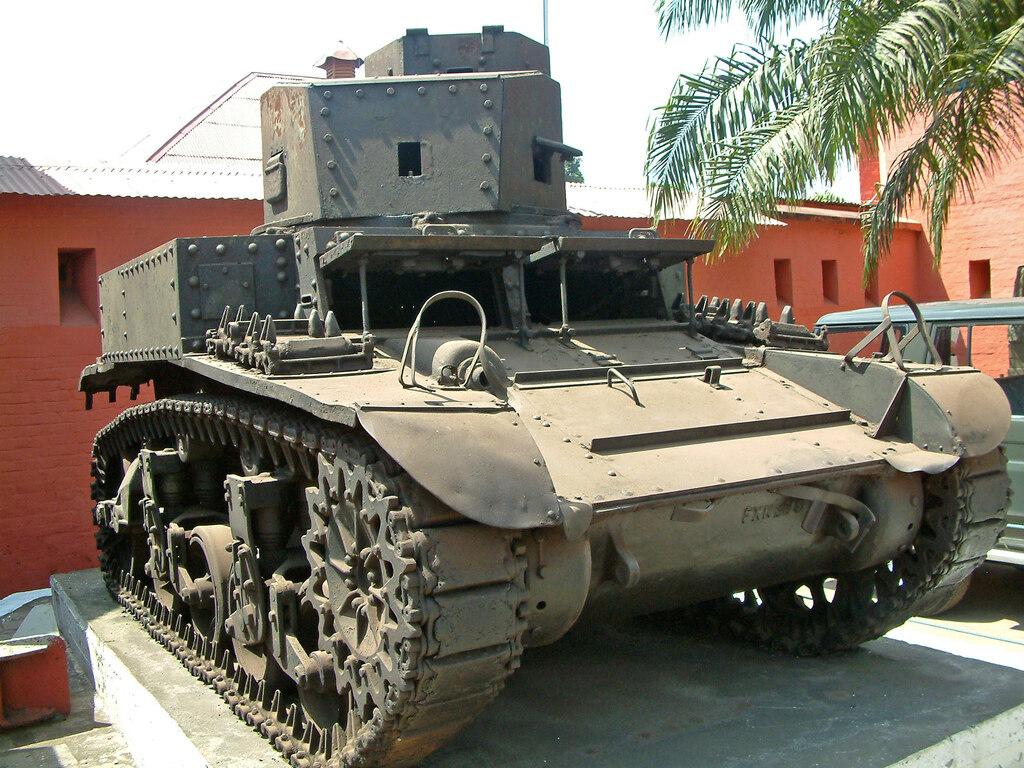
Kumasi, Museum of Armed Forces of Ghana (c) Remo Kurka, Ghana
Dahomey @ Beninvibes.comDiscover More
This remarkable story is only one chapter in the long and often forgotten history of Africa's connections with the wider world. Explore more articles on African kingdoms, Pan-African history, global cultural exchanges and the extraordinary individuals whose lives linked Africa with Europe, Asia and the Americas. Every story opens another door into Africa.