Patrice Lumumba: Ten Weeks in Office, and the Body They Dissolved in Acid
Remarkable Africans · The ones they made sure had no grave
Patrice Lumumba: Ten Weeks in Office, and the Body They Dissolved in Acid
He was the first elected leader of the Congo and he governed for about ten weeks. Then he was dismissed, hunted, arrested, flown to his enemies, beaten in front of ministers, shot against a tree in the dark, buried, dug up, hacked apart and dissolved in sulphuric acid by a Belgian policeman who kept a gold tooth as a souvenir. He was thirty-five. In 2022 Belgium gave the tooth back. In May 2026 the last man who might have stood trial for it died, three months before the case reached a courtroom.
On this website we have written about Mobutu, who ruled the Congo for thirty-two years and left it hollow. This is the article about the man he replaced — and the article Mobutu's story has been leaning on since we published it.
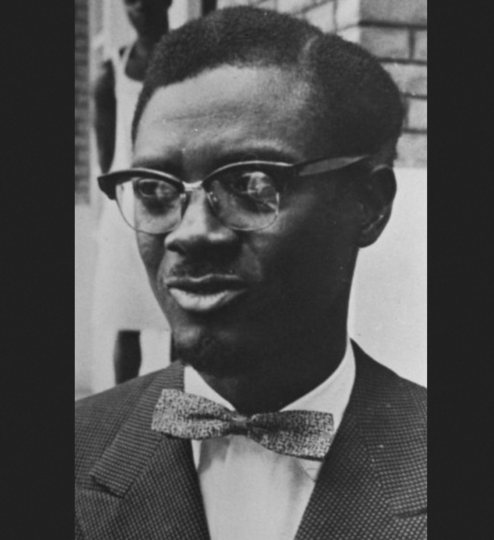
Patrice Émery Lumumba was Prime Minister of the Congo for roughly ten weeks.
Ten weeks.
He has been on postage stamps, on murals, on university buildings and on T-shirts for sixty-five years on the strength of ten weeks in office, and that fact alone should tell you that something extraordinary happened in 1960 and 1961 — something that mattered far beyond one man and one country.
The Congo he inherited
Begin with what Belgium had done, because the murder makes no sense without it.
From 1885 the Congo was not a Belgian colony. It was the personal property of King Leopold II — a private estate the size of western Europe, worked for rubber and ivory under a regime of hostage-taking, mutilation and forced labour whose human cost historians still argue about in millions.
Belgium formally annexed it in 1908, in part because the scandal had become internationally unmanageable. What followed was more orderly and no less extractive.
By 1960, when independence came, the Congo had one of the most valuable mineral endowments on earth — copper, cobalt, diamonds, gold, uranium. The uranium in the bombs dropped on Hiroshima and Nagasaki came from a Congolese mine.
And it had almost no Congolese doctors, engineers, lawyers or army officers. Higher education for Congolese had barely existed. On independence day the officer corps of the Force Publique was entirely Belgian.
A country was handed a flag and a parliament, and almost nothing with which to run either.
The man
Lumumba was born on 2 July 1925 in Onalua, in Kasai, a Tetela — from a people without the numbers or the position to make anyone an obvious national leader.
He was not from the elite. He was a postal clerk, then a salesman for a brewery, and — importantly — a self-taught, formidably articulate writer and speaker who read everything he could get. He was one of the évolués, the small class of Congolese the Belgians classified as sufficiently Europeanised to be granted a card confirming it.
He was jailed in 1956 for embezzlement from the post office, a conviction he served and which his enemies used against him for the rest of his life.
In 1958 he co-founded the Mouvement National Congolais — and it was national in a way almost nothing else in the Congo was. Most Congolese parties were regional or ethnic. The MNC argued for a single, unitary, independent Congo.
That commitment is the thread running through everything that follows, and it is what got him killed.
30 June 1960
Independence day in Léopoldville. King Baudouin came, and delivered a speech praising Leopold II as the founder of the Congolese state and describing Belgian rule as a work of civilisation that the Congolese should be careful not to squander.
President Kasa-Vubu replied politely.
Then Lumumba, who had not been scheduled to speak, went to the microphone.
He spoke about the humiliations. The forced labour. The insults, the beatings, the land taken, the law that was one thing for a white man and another for a black one. He spoke about the Congolese who had died. He addressed it to the Congolese, in front of the King, and he did not soften a syllable of it.
It is probably the most famous speech ever given in Africa, and it was delivered to a Belgian king who had just finished praising the man responsible for the rubber terror.
Baudouin was reportedly ready to leave. Belgian officials never forgave it.
Whatever else that speech was, it was also a political obituary. From that afternoon, a substantial part of the Belgian establishment regarded Lumumba as a problem to be removed.
The country comes apart in eleven days
The Force Publique mutinies against its all-Belgian officer corps. Belgian civilians panic. Order collapses in parts of the country.
Belgium sends troops back into the Congo without the new government's consent, saying it is protecting its nationals.
Katanga declares independence under Moïse Tshombe, backed by Belgian troops, Belgian advisers and the mining companies. Katanga holds the copper and cobalt and accounts for a huge share of national revenue.
South Kasai secedes — the world's largest diamond producer.
A country six weeks old had lost the two provinces that paid for it, to secessions armed and financed from outside.
Lumumba asked the United Nations for help to end the secession. The UN sent a force but declined to use it against Katanga, treating the matter as an internal Congolese affair.
So he asked the Soviet Union.
That request took perhaps a week to be transmuted, in Washington and Brussels, into a settled conclusion: Lumumba was a communist.
He was not. He was a nationalist who wanted the Congo's minerals administered by the Congo, and who asked for help from whoever would give it after the West declined.
In the Cold War that distinction did not exist. A leader sitting on the world's uranium who would not take instruction was categorised, and the categorisation was fatal.
The decision to remove him
This part is not speculation. It is in the archives of both governments.
In August 1960 the CIA director Allen Dulles cabled the Léopoldville station that Lumumba's removal was an urgent and prime objective and a high priority for covert action. President Eisenhower authorised an operation to kill him.
The method was poison. In September the CIA's chief chemist, Sidney Gottlieb — the man behind MKULTRA — flew to Léopoldville and handed the station chief, Larry Devlin, toxic material to be introduced into Lumumba's food or toothpaste.
Devlin did not use it. By his own later account he found it morally wrong and stalled rather than refuse outright. Headquarters grew impatient; there was discussion of a commando snatch, and Devlin at one point asked for a high-powered rifle with a telescopic sight and silencer to be sent by diplomatic pouch.
On the Belgian side, in October 1960, the Minister for African Affairs, Harold d'Aspremont Lynden, cabled Katanga that Belgian policy required the definitive elimination of Patrice Lumumba.
Definitive elimination. In a government cable. In writing.
Two Western governments independently decided to kill the elected prime minister of a country that had been independent for three months, and both wrote it down.
Dismissed, cornered, caught
On 5 September 1960 President Kasa-Vubu dismissed Lumumba. Lumumba responded by dismissing Kasa-Vubu. Parliament backed Lumumba. The constitutional position was a stalemate.
It was resolved by a soldier.
On 14 September, Colonel Joseph-Désiré Mobutu — thirty years old, a former Force Publique sergeant, a former journalist, and until recently Lumumba's own supporter and aide — seized control and announced he was neutralising all politicians.
Lumumba was placed under house arrest, guarded by UN troops on the inside and Mobutu's soldiers on the outside. An absurd, unstable arrangement in which the United Nations protected a man from the government it recognised.
Lumumba slips out and heads east for Stanleyville, where his supporters hold the city. He travels by road through the rainy season, stopping to speak to crowds along the way, which slows him fatally.
He is captured by Mobutu's soldiers at the Sankuru river, a short distance from safety. He is beaten and flown back to Léopoldville, where photographers record him bound in a truck, hair torn, being shown to the cameras.
He was imprisoned at Camp Hardy in Thysville, ninety miles from the capital.
In mid-January 1961 the garrison there began to waver. Some of the soldiers guarding him were sympathetic. The men holding him concluded he could not stay.
The question became where to send him. The two options discussed were Bakwanga in South Kasai and Elisabethville in Katanga.
Both were controlled by men who had every reason to kill him. Everyone involved understood that.
17 January 1961
He was not sent alone. Two of his allies went with him: Maurice Mpolo, a minister, and Joseph Okito, vice-president of the Senate.
Remember both names. They are almost always omitted, and they were murdered the same night, in the same way, for the same reason.
The three men are flown from Léopoldville to Elisabethville in Katanga. They are beaten throughout the flight so severely that the Belgian crew shut themselves in the cockpit.
They are taken to a house near the airport and beaten again — in the presence of Katangan ministers and Belgian officials. Moïse Tshombe and members of his cabinet see the prisoners.
The three are driven into the bush. A firing squad is waiting, commanded by a Belgian officer, with Belgian police and Katangan gendarmerie present. The men are shot one at a time against a tree, in front of each other. Okito first. Then Mpolo. Then Lumumba.
They were buried in a shallow grave in the dark.
He was thirty-five years old. He had been the elected head of his country's government seven months earlier.
What they did afterwards, and why
This is the part you may have heard of, and it is worse in detail than in summary.
Within days it became clear the grave was a liability. It was too shallow, too findable, too close to a road. And the people who had done the killing understood — correctly — that a located grave of Patrice Lumumba would become a place of pilgrimage, and that a body would become evidence.
A Belgian police commissioner in Katangan service, Gerard Soete, was given the job. He and his brother went out with the bodies.
They dug the three men up. They cut them apart. They dissolved the pieces in sulphuric acid, working over two days, drinking heavily to get through it. What would not dissolve was burned or scattered.
And Soete kept souvenirs. Two fingers, and a gold-capped tooth.
Understand what this act was for.
It was not rage, and it was not concealment of a murder that was already an open secret in Katanga.
It was the deliberate destruction of a place where Congolese people could go and stand. It was the denial of a funeral to a nation. Sixty-five years later there is still nowhere in the Congo that holds Patrice Lumumba, and that is not an accident of history — it is the achieved objective of a policy carried out by two men with a saw and a drum of acid.
His death was not announced for three weeks. When it was, the story given out was that he had escaped and been killed by villagers in a hostile district.
Nobody believed it. Protests broke out in Cairo, Belgrade, Paris, London, New York, Accra. Demonstrators stormed the Belgian embassy in Belgrade. There were clashes at the United Nations building in New York.
One detail of timing is worth holding. Lumumba was killed on 17 January 1961 — three days before the inauguration of John F. Kennedy, who had signalled he wanted Lumumba released.
Pauline Opango
You asked the right question, and it is the one almost every account skips.
Pauline Opango was born on 1 January 1937 at Wembonyama in Sankuru. She married Lumumba on 15 March 1951, when she was fourteen and he was twenty-five, in an arranged union. She was his wife for ten years, most of them spent with him in prison, in politics, or on the road.
In February 1961, before Belgium had admitted anything, Pauline walked through Léopoldville at the head of a procession of family and supporters to the United Nations offices in the city. She walked bare-breasted, in the Congolese custom of mourning, and she asked the UN to obtain her husband's body so that she could bury him.
The photographs of that walk went around the world. She is the reason a great many people outside Africa understood, in 1961, that something monstrous had been done.
She never got the body. There was no body.
Threatened by the men now in power, she and the children were sheltered at a UN camp and then smuggled out. She spent decades in exile — Egypt under Nasser above all, and at various times Cuba, Tanzania, Uganda, China, Belgium and France — before returning to the Congo once Lumumba had been officially rehabilitated as a national hero.
She never remarried. She is said to have explained that she could not find anyone of the same quality.
She died in her sleep at her home in Kinshasa on 23 December 2014, aged seventy-seven, a week after returning from medical treatment in Paris.
Pauline Opango waited fifty-three years for something to bury. She died seven and a half years before Belgium handed over the tooth.
The children
Here the published record genuinely disagrees with itself, and we are not going to pretend otherwise.
Lumumba had children by more than one marriage, and totals given in reputable sources range from four to five. With Pauline he had four; two of them died, one of them an infant. The children who lived and who have spoken publicly are François, Juliana (sometimes Julienne) and Roland. A son named Guy-Patrice has also spoken publicly about the family's position. Different obituaries and legal reports name different combinations, and we have not been able to reconcile them.
What is consistent across the accounts is this. When their father was under house arrest, the children were got out of the country. They went to Cairo, under the protection of Gamal Abdel Nasser — François was about ten, Roland about two and a half. They never saw their father again.
They grew up scattered across the sympathetic capitals of the non-aligned world, and they have spent their adult lives on this case.
The last letter
From prison, Lumumba wrote to Pauline. It is the most quoted document he left, and it was written by a man who knew what was coming.
He told her not to weep for him. He said he had given his life to his country. He asked her to raise the children to know what he had been trying to do. And he wrote that the history that would eventually be told about him would not be the history taught in Brussels, Paris, Washington or at the United Nations, but the history written by a free Africa about itself.
He was not wrong. It simply took sixty-five years and it is not finished.
What Belgium admitted, and when
The Church Committee in the US Senate documents the CIA plot to poison Lumumba but concludes the agency was not responsible for the killing itself. Devlin's testimony is central to that finding. Later researchers established that he had told the committee he learned of the transfer to Katanga only afterwards, when a contemporaneous cable showed he had known in advance.
Ludo De Witte publishes The Assassination of Patrice Lumumba, reconstructing Belgian involvement in detail. It forces the Belgian parliament to act.
The Belgian parliamentary commission of inquiry reports — 988 pages. It finds that members of the Belgian government of the day bore moral responsibility for the circumstances leading to Lumumba's death. It also notes that Belgian files suggest the CIA's role in the hunt for Lumumba was larger than the Church Committee was prepared to admit.
Belgium formally apologises.
Soete's daughter shows the gold tooth to a Belgian magazine. It is seized by prosecutors.
At the Egmont Palace in Brussels, Belgium hands a small blue box to the Lumumba family. Prime Minister Alexander De Croo apologises for his country's role and says it was not normal for Belgium to have held the remains of a founding father of the Congolese nation for six decades. The tooth flies to Kinshasa on 27 June.
Two things about that ceremony deserve stating plainly. The federal prosecutor's office had already said there was no absolute certainty the tooth was Lumumba's, because no DNA test could be performed. And a substantial part of the family regarded the ceremony as a diplomatic transaction rather than justice.
Sixty-one years, and what came home was one tooth of uncertain provenance in a box.
The trial that almost happened
François Lumumba's 2011 complaint named ten Belgians. Over the following fifteen years, one after another, they died.
By 2026 there was one left: Étienne Davignon, ninety-three, a junior diplomat in the Belgian ministry for African affairs in 1961, and later a vice-president of the European Commission and one of the most prominent men in Belgian public life.
The Brussels Court of First Instance hears argument on whether the case can proceed. Yema and Mehdi Lumumba attend.
The court orders Davignon to stand trial for war crimes — the unlawful transfer of Lumumba and his colleagues to Katanga, their humiliating and degrading treatment, and the denial of a fair trial. The court goes further than the prosecutor asked and extends the case to cover the murders of Mpolo and Okito as well. Trial expected in 2027.
Davignon appeals. He has denied the charges throughout.
Davignon dies, aged 93. Under Belgian law the death of the accused ends the prosecution. There will be no trial.
It would have been the first criminal trial anywhere in Europe of a state official for a political murder committed in a colonial context. Not a reparations claim, not a commission of inquiry, not an expression of regret — a criminal court, a defendant, and a verdict.
It got to within roughly a year of happening.
The family's response was that the indictment itself remains the achievement: for the first time, a former colonial power's own courts accepted that a colonial-era political killing was a matter for the criminal law, and named a defendant. That precedent survives him.
What does not survive is the verdict. Nobody has ever been convicted of anything for the murder of Patrice Lumumba. Not a Belgian, not a Congolese, not an American. Not one person, in sixty-five years.
The uncomfortable part
An honest article has to say the things that spoil the icon, because the icon is doing damage of its own.
Lumumba was thirty-four when he became prime minister and he was not a skilled administrator. He was impatient, and he was combative in situations that called for arithmetic. His speeches made enemies he could not afford at a moment when he had almost no army, almost no treasury and almost no trained officials.
His handling of the South Kasai secession involved sending troops into a region where large-scale killings of Luba civilians followed. That episode is part of the record and Congolese historians have not forgotten it, even where responsibility for specific decisions is contested.
And the men who physically arrested him, delivered him and shot him were Congolese. Mobutu was Congolese. Tshombe was Congolese. The soldiers at the Sankuru river were Congolese.
The Cold War did not produce the Congolese men willing to do it. It found them, paid them and protected them afterwards.
Foreign governments decided he should die. Congolese hands did it. Both halves of that sentence are load-bearing, and a version that drops either one is propaganda.
None of this makes the killing anything other than what it was: the murder of an elected head of government by men who could not remove him legally and did not intend to try.
Why he belongs on this site
Because the Congo is the clearest case anywhere on this continent of independence granted with one hand and taken back with the other, and Lumumba is where you can watch it happen in real time — inside seven months, from a speech on 30 June to a firing squad on 17 January.
And because of what came next, which is the point of putting these articles side by side.
The man who arrested Lumumba ruled the Congo for thirty-two years, was received at the White House by a succession of American presidents, built a palace complex in a rainforest village with a runway long enough for Concorde, and died in Morocco with his wealth intact and no court ever having asked him a question. The country he left behind went into a war that killed millions and has never fully stopped.
That is the price of one assassination, and it is still being paid.
What remains
There is a boulevard in Kinshasa and a monument at the end of it.
There is a tooth, of uncertain provenance, returned in 2022.
There is a 988-page Belgian parliamentary report finding moral responsibility, and an apology, and a set of Belgian and American cables that say in plain administrative language what was intended.
There is an indictment, unheard, against a man who died in May.
There is a grave in Kinshasa for Pauline Opango, who spent fifty-three years asking for her husband's body and was buried without ever receiving it.
And there is no grave for Patrice Lumumba, because two men with a saw and a drum of acid were sent out into the Katangan bush to make sure that there never would be.
They understood him better than his own government did.
Connected reading & sources
- Mobutu Sese Seko — the man who killed African independence
- The minerals still leave
- Thomas Sankara — the African revolution murdered by his best friend
- The long road to freedom — the leaders who paid the highest price
- Murtala Mohammed — the Nigerian general murdered in his own car
- Idi Amin — the eight years that broke Uganda
- The Akosombo Dam and Africa's dream of independence
- ECCHR — Brussels court opens trial against Davignon, 17 March 2026
- ECCHR — on the death of Étienne Davignon and the end of the proceedings
- Human Rights Watch — landmark trial for Belgian colonial crimes
- Al Jazeera — Belgian court orders Davignon to stand trial
- NBC News — the return of Lumumba's tooth, 2022
- Foreign Affairs — Stephen Weissman on the CIA in the Congo
- U.S. Office of the Historian — on the 2001 Belgian commission and the Church Committee
Verified: 6 September 2026.
Checked against the findings of the 2001 Belgian parliamentary commission of inquiry, United States Office of the Historian material, published work on CIA operations in the Congo including Stephen Weissman's research, Ludo De Witte's The Assassination of Patrice Lumumba, and contemporary reporting of the 2022 restitution and the 2026 Brussels proceedings by Human Rights Watch, the ECCHR, Al Jazeera, Reuters and NBC News. The dates of independence on 30 June 1960, the Katangan secession of 11 July 1960, Lumumba's dismissal on 5 September 1960, Mobutu's seizure of power on 14 September 1960, his flight of 27 November and capture on 1 December 1960, the killings of Lumumba, Maurice Mpolo and Joseph Okito on 17 January 1961, the handover of the tooth on 20 June 2022, the Brussels referral of 17 March 2026 and the death of Étienne Davignon on 18 May 2026 are as recorded. Where the record is uncertain it is stated as uncertain: published accounts of Lumumba's children differ on their number and names and have not been reconciled here; the Belgian federal prosecutor's office stated that no DNA testing could confirm the returned tooth as Lumumba's; and the precise division of responsibility between Belgian, American, Katangan and Congolese actors remains a subject of scholarly dispute, though the documented intent of both the Belgian and United States governments to bring about his removal is not in dispute. Étienne Davignon denied the charges against him throughout and died before any trial; he was never convicted of any offence. This page makes no allegation against any living person.
Header photo: British Army patrol crossing a stream during the Mau Mau rebellion. The soldiers carry a variety of weapons, including the X8E1 (Belgian-made 7.62mm FN FAL) (1st and 2nd soldiers from right); the 9 mm Sten Mk5 and the Lee Enfield .303 Rifle No. 5 (4th and 5th soldiers). Weapons are identified from the book The FN FAL Battle Rifle, by Bob Cashner
Discover More
This remarkable story is only one chapter in the long and often forgotten history of Africa's connections with the wider world. Explore more articles on African kingdoms, Pan-African history, global cultural exchanges and the extraordinary individuals whose lives linked Africa with Europe, Asia and the Americas. Every story opens another door into Africa.