Mobutu Sese Seko: The Man Who Killed African Independence
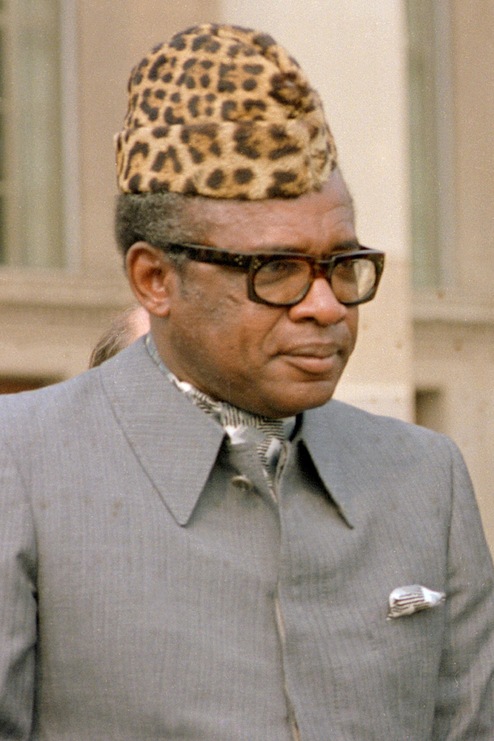
Remarkable Africans · The ones who did the damage
Mobutu Sese Seko: The Man Who Killed African Independence
He had the Congo’s first elected leader flown to his death, ruled for thirty-two years, built a runway for Concorde in a jungle village so he could fly to Paris to shop, and left behind a state so hollowed out that 5.4 million people died in the war that followed. He did not do it alone. Belgium and Washington put him there and paid the bills for three decades.
In this series we have written about people history mislaid — a Wolof girl who defended her freedom in an American court, a market woman who financed Ghana’s independence, a cook from South Carolina sold to Europe as an African warrior.
This one is different. Mobutu Sese Seko was not mislaid. He is remembered exactly as he deserves.
He belongs here because of what he was for: he is the clearest case anywhere on the continent of an African independence stolen the moment it was granted, and of who benefited from stealing it.
The country he was given
The Congo became independent from Belgium on 30 June 1960, after one of the most brutal colonial administrations in history — a territory that had been the personal property of a Belgian king, worked for rubber and ivory at a human cost historians still argue about in millions.
It was also, geologically, one of the richest places on earth. Copper, cobalt, diamonds, gold, uranium. The uranium in the bombs dropped on Hiroshima and Nagasaki came from the Congo.
Within weeks of independence, it began coming apart.
Katanga province declared its own independence in July 1960. Katanga held most of the country’s mineral wealth and accounted for roughly forty-five per cent of national GDP. South Kasai followed — the biggest diamond producer in the world. A country three days old had lost the two provinces that paid for it.
None of that was accidental. Katanga’s secession was backed by Belgian interests and Belgian troops, and the mining companies did not stop operating for a day. The message to every newly independent African state was plain: you may have the flag, but the minerals stay where they are.
Patrice Lumumba, and why he had to go
Patrice Lumumba was the Congo’s first democratically elected Prime Minister and one of the great figures of pan-Africanism. His position was straightforward and, to Brussels and Washington, intolerable: the Congo’s mineral wealth should be administered by the Congolese.
In the Cold War, a leader who said that and then asked the Soviet Union for help when the West refused it was categorised immediately. Not as a nationalist. As a communist threat sitting on top of the world’s uranium.
He had been Prime Minister from June to September 1960. Three months.
The man they chose instead
Joseph-Désiré Mobutu was born on 14 October 1930 at Lisala in Équateur province, a Ngbandi from a people other Congolese looked down on. He served in the Force Publique, the Belgian colonial army, from 1949. He then worked as a journalist. He joined Lumumba’s Mouvement National Congolais and was, at the start, Lumumba’s supporter.
He was thirty years old, personable, and had contacts on both sides. One account of the period calls him the smiling soldier behind the glasses.
In September 1960, as Lumumba and President Kasa-Vubu tried to dismiss one another, Mobutu seized control of the government and announced he was “neutralising” all politicians.
He was not a strongman who fought his way to the top. He was an officer that two Western governments identified as useful, and promoted.
January 1961
Lumumba was arrested by Mobutu’s troops.
He was flown to Katanga — the secessionist province, run by his enemies, backed by Belgium. There he was tortured and killed in January 1961.
The mechanics matter. Mobutu did not pull a trigger. His soldiers arrested the elected Prime Minister of their own country, and he was put on an aircraft to a province controlled by men who had every reason to kill him. Nobody involved could have believed he would arrive alive.
Belgian and American involvement in Lumumba’s removal has been documented, acknowledged and, in Belgium’s case, formally apologised for. Accounts differ over precisely how much encouragement came from the CIA and how much initiative was Mobutu’s own. What is not in dispute is that his removal served both governments, and that both worked towards it.
In February 1961 Mobutu handed the government back to Kasa-Vubu, who made him commander-in-chief of the armed forces. He was twenty-nine days past his thirtieth birthday when Lumumba died, and he had just become the most powerful man in the Congo.
In May 1963 he visited the White House at the invitation of John F. Kennedy. Shortly afterwards, American arms and military equipment were shipped to the Congo.
Thirty-two years
Mobutu removes President Kasa-Vubu in a second coup and takes the presidency himself. He will hold it until 1997.
Serves as Chairman of the Organisation of African Unity — the continental body founded to advance African liberation.
Renames the country Zaire. Launches the authenticité campaign: Congolese names replace European ones, Western dress is banned, Belgian cultural influence stripped out. He renames himself Mobutu Sese Seko Kuku Ngbendu Wa Za Banga — roughly, the all-powerful warrior who goes from conquest to conquest leaving fire in his wake.
Zaïrianisation: foreign-owned businesses are seized and handed to Mobutu’s allies and relatives. It is presented as economic liberation. It destroys the economy within two years, because the recipients were chosen for loyalty rather than competence and most simply stripped the assets.
Zaire accepts its first IMF Structural Adjustment Package. A country with some of the richest mineral deposits on earth is now a debtor.
Kleptocracy is refined into a system of government: opponents are bought rather than beaten, allies are paid, and the state exists to distribute money upward. The word kleptocracy attaches itself to his regime and has never really come off.
The Cold War ends. Mobutu’s usefulness ends with it. Western support begins to evaporate, and the regime starts running out of money it cannot print.
Facing Laurent-Désiré Kabila’s advancing forces, Mobutu flees Kinshasa. The rebels enter the capital unopposed.
The Versailles of the Jungle
To understand what thirty-two years of this did, go to Gbadolite.
It was a village in the equatorial forest in the north, near where he was born. Mobutu turned it into his private capital.
He chartered Concorde from Air France to fly to Paris on shopping trips. That is what the runway was for.
He built a supersonic airstrip in a rainforest village so that shopping would not take too long, in a country where people were dying of treatable illnesses for want of a clinic.
Meanwhile Zairian civil servants went unpaid for months. Hospitals ran without medicine. Roads that existed at independence returned to bush. The state stopped functioning in almost every respect except the collection of money.
How much did he take?
Nobody knows, and that is worth saying plainly rather than repeating a confident number.
Published estimates of Mobutu’s personal fortune vary enormously — from a few billion dollars to figures approaching the entire national debt of the country he ran. Assets were spread across Swiss accounts, French and Belgian property, and holdings that were never traced. Very little was ever recovered.
What can be stated without an estimate: he was among the wealthiest men in the world while running one of the poorest countries in the world, and the two facts were the same fact.
His widow, Bobi Ladawa, has lived in exile since 1997, reportedly dividing her time between Rabat, the Algarve, Brussels and Paris, where she owns property.
Who paid for it
This is the section most accounts leave out, and it is the reason this article exists.
Mobutu was not an African aberration that the West merely tolerated. He was an African asset that the West maintained.
He was received at the White House by successive American presidents — Kennedy in 1963, Nixon in 1973, and others after them. He received American military and financial support across three decades. His regime survived economic collapse in the 1970s and 1980s specifically because Western patronage held it up, at a time when his own economy could not.
The logic was never hidden. Zaire was anti-communist, it was enormous, it sat on strategic minerals, and it was a base for Western operations elsewhere in Africa. Corruption was the price of reliability, and it was considered worth paying.
And when the Cold War ended in 1990, that calculation changed overnight. The support was withdrawn, and within seven years the regime it had sustained fell apart.
Thirty-two years of theft, and the thing that ended it was not conscience, sanctions or justice. It was a change in the international balance of power that made him no longer worth funding.
Rabat
He fled Kinshasa on 16 May 1997, went first to Gbadolite, and then to Rabat in Morocco. His palaces were looted and vandalised behind him.
He died there on 7 September 1997, aged sixty-six, of prostate cancer, with his wife at his bedside. He is buried in Rabat.
He never faced a court. Nothing meaningful was recovered. His son Nzanga later entered Congolese politics and served in government.
What he left
The worst part of the Mobutu story is not the thirty-two years. It is the thirty years since.
Laurent-Désiré Kabila, who overthrew him, governed in ways strikingly continuous with what came before — cracking down on opponents, presiding over the same patterns of corruption. Scholars describe it as Mobutism without Mobutu.
In 1998, Rwanda and Uganda — the very forces that had put Kabila in power — invaded again to remove him. The Second Congo War that followed killed an estimated 5.4 million people, the deadliest conflict anywhere in the world since the Second World War.
Today the Democratic Republic of the Congo has as many as 150 armed groups operating within it. The eastern provinces have not known sustained peace in a generation. And the minerals still leave.
Mobutu did not merely rob a country. He dismantled the institutions that would have allowed it to defend itself afterwards, and the bill for that is still being paid in lives.
The uncomfortable part
An honest article has to state the things that do not fit the simple version.
The authenticité campaign was not entirely cynical, and it was popular. Reclaiming African names, African dress and African cultural confidence after eighty years of Belgian rule spoke to something real, and other African states watched it with interest. Mobutu understood the emotional territory of decolonisation better than most of his contemporaries.
He also held together, for three decades, a vast and impossibly diverse country that had begun falling apart within a fortnight of independence and has struggled to hold together since. That was not nothing, even though the method was patronage and fear.
And Gbadolite’s Jesuit school was genuinely excellent. Its graduates are still around.
None of this is mitigation. It is the reason he lasted. Pure predators do not survive thirty-two years; he survived because he offered enough people enough of something — pride, position, payment — and because the alternative was made to look like chaos.
That is how kleptocracies actually work, and pretending otherwise makes them harder to recognise next time.
Why he belongs on this site
Because African independence is the name of this website, and Mobutu is what happens to it when the people who granted it decide they would rather keep the minerals.
Ghana got Nkrumah — who was himself removed by a coup, in 1966, while flying to Hanoi. The Congo got Lumumba for ninety days and then thirty-two years of Mobutu.
Every African country that won its flag in that decade faced the same question: would independence mean control of its own resources, or only a change of anthem? The Congo asked the question loudest, and got the most violent answer available.
Read about Mobutu and you are not reading about one greedy man. You are reading about how a continent’s independence was negotiated down, in real time, by people who never had to explain themselves.
He was buried in Morocco with his wealth intact, having never answered a single question in a courtroom.
That is the story. It should be told exactly that way.
More in this series
- Anna Madgigine Jai Kingsley — the Wolof girl who defended her freedom
- Madame Abomah — the Dahomey warrior who was born in South Carolina
- African radio, live — the whole continent on one page
- Rebecca Naa Dedei Aryeetey — the woman on Ghana’s 50 pesewa coin
- Dr Kwame Nkrumah
- Old Parliament House, Accra — where a statue was beheaded in 1966
- The history of Ghana
Verified: 29 August 2026.
Compiled from Encyclopaedia Britannica, published academic work including the London School of Economics Africa research blog, and documented histories of the Congo Crisis and the Mobutu period. Dates of the September 1960 and November 1965 coups, the renaming of the country in 1971, the Zaïrianisation programme of 1973, the 1976 structural adjustment agreement, the flight from Kinshasa on 16 May 1997 and his death at Rabat on 7 September 1997 are as recorded. Details of Gbadolite — three palaces, the Concorde-capable airport, the Ubangi hydroelectric dam, the hospital, schools and shopping facilities — are as documented in reporting and published accounts of the site. No figure is given for Mobutu’s personal fortune, because published estimates vary by billions and none has been verified; that uncertainty is stated rather than resolved. Responsibility for the death of Patrice Lumumba is described as it stands in the historical record: he was arrested by troops under Mobutu’s command and transferred to Katanga, where he was killed in January 1961; Belgian and American involvement in his removal is documented, and the precise division of responsibility remains a subject of scholarly debate. The estimated death toll of the Second Congo War and the number of armed groups presently active in the DRC are as reported in published sources. This page makes no allegation against any living person.
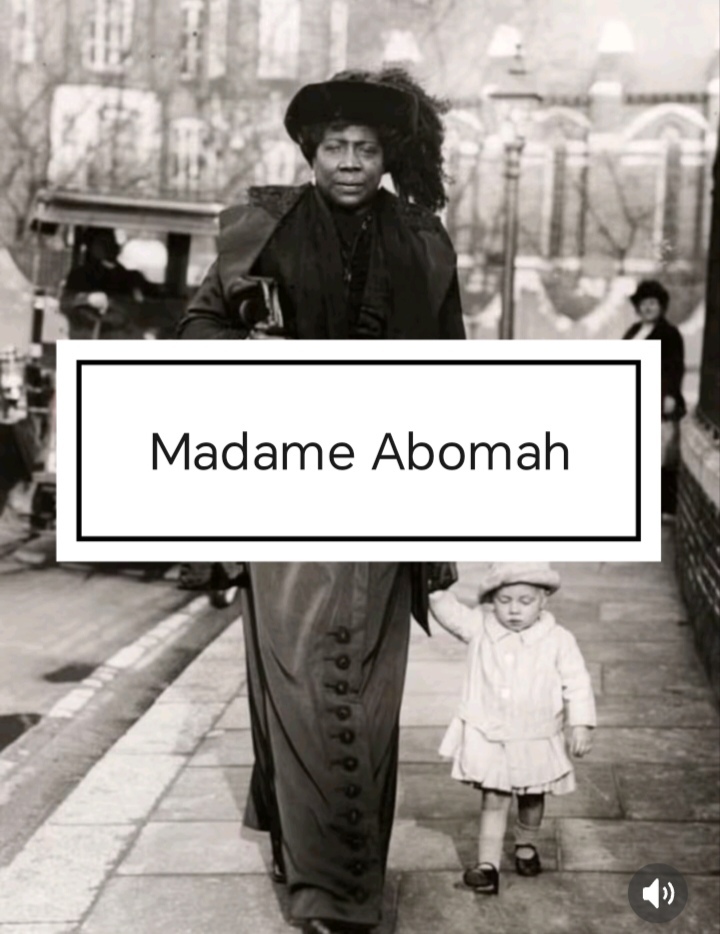
Madame Abomah: The Dahomey Warrior Who Was Born in South Carolina
Dahomey @ Beninvibes.comDiscover More
This remarkable story is only one chapter in the long and often forgotten history of Africa's connections with the wider world. Explore more articles on African kingdoms, Pan-African history, global cultural exchanges and the extraordinary individuals whose lives linked Africa with Europe, Asia and the Americas. Every story opens another door into Africa.