John Magufuli: The President Who Disappeared — His Death, COVID, Samia and Tanzania's Unanswered Questions
Video Content: Watch below, 3 short videos.
Remarkable Africans · The ones history left questions about
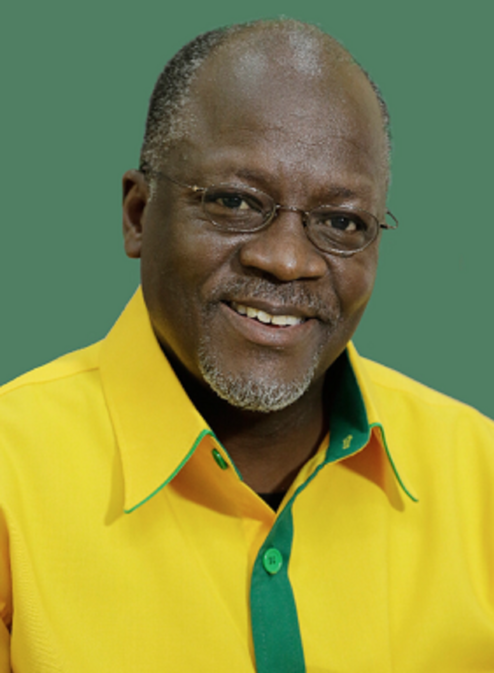
John Magufuli: The President Who Disappeared
He disappeared from public view for almost three weeks. His government said little. An opposition leader said he was critically ill with Covid and had been taken abroad. Kenyan newspapers reported that an unnamed African leader was receiving treatment in Nairobi. Then, on 17 March 2021, Vice-President Samia Suluhu Hassan announced that Magufuli had died in a Dar es Salaam hospital of a heart condition. No independent public investigation settled the competing accounts. What happened in those missing days remains one of Tanzania's most uncomfortable unanswered questions.
There are stories in African politics that are difficult because the facts are complicated. And then there are stories that are difficult because too many of the facts stop just short of an answer.
John Pombe Magufuli's death belongs in the second category.
He was Tanzania's president, one of the most forceful and controversial African leaders of his generation, and a man who had made himself famous by confronting corruption, cutting government extravagance and refusing to behave as international institutions expected him to behave.
He was also a deeply authoritarian president. Opposition politicians were arrested. Newspapers were pressured. Political space narrowed. His 2020 re-election was disputed by opponents, and violence surrounded the campaign.
None of that should be forgotten simply because his death became mysterious.
Nor should the mystery be dismissed simply because he was an authoritarian.
The two things can be true at once.
The man they called the Bulldozer
John Pombe Joseph Magufuli was born on 29 October 1959 in Chato, in what was then Tanganyika. He trained as a teacher and later earned a doctorate in chemistry. He entered parliament in 1995 and became known as a minister who travelled to construction sites and government offices looking for waste and corruption.
When he won the presidency in 2015, he arrived with a simple political message: Tanzania was wasting money, government officials were living too well, and the country needed to build.
He cancelled expensive official celebrations. He ordered officials to use cheaper means of transport. He pushed major infrastructure projects, including the Standard Gauge Railway, the Julius Nyerere Hydroelectric Power Project and the relocation of government functions to Dodoma.
His supporters saw a president finally making the state work.
His critics saw something else: a president who increasingly treated opposition, independent media and institutional restraints as obstacles.
That contradiction is essential. Magufuli was neither the cartoon dictator his enemies sometimes portrayed nor the spotless African nationalist his admirers sometimes remember. He could fight corruption while restricting political freedom. He could build infrastructure while intimidating opponents. He could demand accountability from civil servants while becoming increasingly intolerant of criticism himself.
Then came Covid
This is where Magufuli's story becomes internationally explosive.
When Covid-19 reached Africa in 2020, Tanzania initially reported cases. Then the reporting stopped.
Magufuli became one of the world's most prominent sceptics of the official pandemic response. His government stopped publishing national Covid statistics in May 2020. The president questioned testing, mocked some testing results, promoted prayer and traditional or herbal approaches, and later openly rejected Covid vaccination.
In January 2021 the World Health Organization publicly urged Tanzania to resume scientific measures, share data and promote vaccination and mask-wearing. Reuters reported that Magufuli had publicly rejected vaccines and had suggested that vaccines might be part of a foreign conspiracy, without evidence.
That was not a small disagreement.
It put Tanzania directly against the international health establishment at precisely the moment when governments, pharmaceutical companies, philanthropies and international organisations were building the largest coordinated vaccination campaign in modern history.
It is important not to rewrite the history. The global Covid response was not a single organisation controlled by one man. COVAX was a partnership led by CEPI, Gavi and WHO, while the wider ACT-Accelerator brought together governments, health organisations, businesses, scientists, philanthropies and civil society. The Bill & Melinda Gates Foundation was one of its major partners and was involved from the beginning.
That network is documented by the organisations themselves. What it does not establish is a secret plot to harm Magufuli.
The distinction matters because this story becomes much stronger when the documented facts are allowed to stand on their own.
Magufuli was resisting a major international system of health governance.
That is a fact.
Whether that resistance had anything to do with what happened to him is another question entirely.
27 February 2021
This is the date the story changes.
Magufuli was last publicly seen at a ceremony in Dar es Salaam on 27 February.
Then he vanished.
For a president who normally appeared frequently in public, travelled around the country and dominated Tanzania's political life, the silence was extraordinary.
At first the government offered reassurance.
There was no dramatic announcement that the president was seriously ill.
There was no detailed medical bulletin.
There was no live appearance from the president.
Instead, rumours began to consume East Africa.
Magufuli is last publicly seen in Dar es Salaam.
The president remains absent. Speculation over his health grows.
The later official account says Magufuli was briefly admitted to the Jakaya Kikwete Cardiac Institute in Dar es Salaam and discharged the following day.
Opposition leader Tundu Lissu publicly says Magufuli is critically ill and has been taken abroad. Tanzanian officials deny that the president is sick and say he is working normally.
The later official account says Magufuli became ill again and was taken to Mzena Hospital in Dar es Salaam.
Vice-President Samia Suluhu Hassan announces that Magufuli has died at about 6 p.m. of a heart condition.
The Nairobi story
This is where an honest article must slow down.
Tundu Lissu was not an independent medical investigator. He was Magufuli's principal political opponent and had been living in exile after the 2020 election. His claims about the president's condition therefore had an obvious political dimension.
But dismissing them completely would also be wrong.
Lissu said that sources in Kenya had told him Magufuli had been flown to Nairobi after suffering a cardiac arrest and that he was critically ill with Covid. Kenyan media separately reported that an unnamed African leader was receiving treatment in Nairobi. The reports were never independently confirmed as referring to Magufuli.
The Guardian reported that Lissu's claims had not been independently verified. That caveat is crucial.
But so is the other fact: the government itself did not publicly explain the president's whereabouts while the rumours were spreading.
Then the government changed the story
On 12 March, Prime Minister Kassim Majaliwa said Magufuli was alive, healthy and working hard.
Five days later, Samia Suluhu Hassan announced his death.
The official explanation was a heart condition.
It was not an implausible diagnosis. Magufuli reportedly had a history of heart problems and a pacemaker. The official account said that he had suffered from the condition for approximately ten years.
There is therefore no medical impossibility in the government's version.
But the public was left with a simple problem:
Where had the president actually been?
The official version said Dar es Salaam.
Regional reporting and opposition sources said Nairobi and possibly India.
No independent public investigation conclusively established the president's movements during those missing weeks.
What we know — and what we don't
The temptation to connect the dots
Once the facts are placed next to one another, the temptation is obvious.
A president rejects the dominant international Covid narrative.
He rejects vaccination.
He stops publishing Covid statistics.
He disappears.
His government refuses to explain the disappearance in detail.
An opposition leader says he has Covid and is abroad.
Kenyan media report that an unnamed African leader is in a Nairobi hospital.
Then the president dies.
The explanation is a chronic heart condition.
Four years later, his successor is openly participating in the international economic and technological system from which Magufuli had kept his distance.
That sequence is enough to make people suspicious.
It is not enough to prove murder.
Those are two different things.
This article does not turn suspicion into fact. There is no credible public evidence presently establishing that Magufuli was assassinated because of his Covid policy, his opposition to vaccination, his relationship with the West, or his resistance to international institutions.
There is, however, ample evidence that the circumstances surrounding his final weeks were unusually opaque. That deserves historical investigation regardless of what conclusion one eventually reaches.
Then came Samia
On 19 March 2021, Samia Suluhu Hassan was sworn in as Tanzania's president.
She became the first woman to hold the presidency of Tanzania.
And almost immediately, the direction of the country began to change.
The Covid information blackout ended. Tanzania re-engaged with the WHO. Vaccination became government policy. International investors were courted. Foreign relations became less confrontational.
The country was no longer presenting itself as the African government that would simply ignore international health advice.
It was reopening.
The World Economic Forum connection
This is another area where precision is more powerful than exaggeration.
Samia's relationship with the World Economic Forum did not begin after she became president.
In 2016, while she was Vice-President of Tanzania, the World Economic Forum listed her among the key African participants at its meeting in Kigali, Rwanda.
The Forum's own 2016 material identified the theme as connecting Africa's resources through digital transformation and explicitly placed the meeting in the context of the Fourth Industrial Revolution.
In January 2023, President Samia appeared at the World Economic Forum Annual Meeting in Davos.
And she did not merely attend.
She made a direct appeal for greater private-sector investment in Tanzania and spoke about the country's energy resources, manufacturing and Fourth Industrial Revolution technologies.
On 18 January 2023, Tanzania's own diplomatic mission recorded a strategy dialogue between Samia and Professor Klaus Schwab, the founder and executive chairman of the World Economic Forum.
None of this proves anything sinister.
It does establish something important: the Tanzania that emerged after Magufuli's death was far more comfortable inside the international investment and policy architecture than the Tanzania Magufuli had built.
The Fourth Industrial Revolution
Here the language itself deserves attention.
The phrase "Fourth Industrial Revolution" is not an invention of critics of the WEF. It is one of the Forum's own central concepts.
Klaus Schwab wrote that the Fourth Industrial Revolution involves technologies merging the physical, digital and biological worlds. The World Economic Forum has described technologies becoming embedded not only in society but in human bodies, citing developments such as genome editing, machine intelligence and new materials.
That is a remarkable statement.
It is also not evidence of a secret programme to implant people.
The distinction is important.
There are real technologies involving biotechnology, implantable devices, biosensors, artificial intelligence, genetic engineering and human-machine interfaces. The WEF openly discusses the opportunities and risks of these developments.
The serious question is therefore not whether such technology exists.
It does.
The serious question is who controls it, who regulates it, who owns the resulting data, and what happens to individual autonomy when biological and digital systems increasingly overlap.
And Bill Gates?
Bill Gates belongs in the historical discussion, but again the facts need to be kept separate from claims that cannot be demonstrated.
The Bill & Melinda Gates Foundation was a major participant in the global Covid response. The WHO's own ACT-Accelerator documentation lists the Gates Foundation among the organisations involved in the programme, alongside WHO, Gavi, CEPI, the World Bank and others.
COVAX was the vaccine pillar of that wider structure.
That relationship is real.
It is also true that the Gates Foundation has invested heavily in global health, vaccination, diagnostics and biotechnology for decades.
What has not been established by credible evidence is the claim that Covid vaccines secretly contain tracking microchips or that vaccination was a covert Gates programme for implanting technology into human beings.
That claim should not be inserted into this article simply because it makes the story darker.
The documented story is already dark enough.
The Gates Foundation's involvement in global vaccination is a matter of public record. The WEF's interest in biotechnology and technologies that can interact with or become embedded in the human body is also a matter of public record. Neither fact, by itself or together, establishes a conspiracy against Magufuli.
But both belong in a serious discussion about who shapes global health policy and who gets to make decisions affecting billions of people.
The Tanzania that followed
For a while, the new direction looked successful.
Samia presented Tanzania as open, investable and internationally connected.
Tourism recovered.
Foreign investment was actively courted.
Tanzania's government worked to repair relationships with international partners.
The country's image of stability appeared intact.
Then came 2025.
29 October 2025
Tanzania went to the polls.
By then, the political environment had deteriorated sharply.
The main opposition party, CHADEMA, was barred from participating. Its leader, Tundu Lissu—the same Tundu Lissu who had publicly spoken about Magufuli's disappearance four years earlier—was facing treason charges.
Other opposition candidates were also excluded.
Samia won the election with approximately 98 percent of the vote.
The African Union observer mission subsequently said the election did not meet democratic standards.
Then the streets erupted.
Internet access was restricted. A curfew was imposed in Dar es Salaam. Security forces confronted protesters. Videos circulated showing dead and wounded people, although much of the material could not initially be independently verified.
The government accused protesters of attempting a coup and said the security forces had acted responsibly. Opposition groups accused the authorities of massacring civilians.
Then the number became official
For months the government avoided confirming a death toll.
Opposition groups claimed hundreds had been killed. Some estimates were considerably higher.
Then, in April 2026, a government-appointed commission reported that at least 518 people had been killed during the violence surrounding the election.
The commission attributed the violence principally to protesters and did not find against the security forces in the way opposition groups had demanded. It recommended further investigation.
Human-rights groups and Reuters reporting, however, documented allegations that security forces had used excessive force, including shooting unarmed civilians. The government denied systematic brutality.
The full commission report was not publicly available when these findings were reported.
So again, we must separate the facts:
The man who asked where Magufuli was
There is something almost painfully circular about the story.
Tundu Lissu was the opposition politician who, in March 2021, was publicly asking where John Magufuli was.
He said the president was seriously ill.
He said the president had Covid.
He said the president had been moved abroad.
At the time, the Tanzanian government rejected the claims.
Four years later, Lissu was once again at the centre of Tanzania's political crisis.
This time he was not asking where the president was.
He was fighting a government under the woman who had succeeded Magufuli.
And the election in which he and his party had hoped to challenge that government was effectively closed to them.
History does not always repeat itself.
Sometimes it simply changes the names.
The uncomfortable comparison
Magufuli and Samia are often presented as opposites.
That is broadly true in international style.
But there is another similarity that should not be ignored.
Both governments have been accused of restricting political freedom.
Both have used the machinery of the state aggressively against opponents.
And the 2025 violence demonstrated that changing the country's international language did not automatically create a liberal democracy at home.
That is perhaps the most uncomfortable lesson of all.
So was Magufuli murdered?
Here is where this article refuses to give the reader the easy answer.
We do not know.
The official cause of death was a heart condition.
Magufuli reportedly had a longstanding cardiac problem.
He was treated in Dar es Salaam according to the official account.
There were persistent reports that he had Covid and had been treated abroad.
Those reports were never independently proven.
There has been no publicly established forensic finding proving that he was poisoned, suffocated, injected with something, assassinated or otherwise deliberately killed.
Anyone claiming that the assassination is proven is going beyond the evidence.
But the opposite claim—that every question is absurd and there is nothing unusual about the story—is also unsatisfactory.
A president disappeared from public life for almost three weeks.
The government gave little information while speculation exploded.
Opposition sources supplied a completely different account.
Regional media independently reported an unidentified African leader receiving treatment in Nairobi.
The government later announced the president's death and supplied a cardiac explanation.
And the public never received a fully independent reconstruction of those final weeks.
What about the vaccines?
This deserves its own answer because the subject has become so contaminated by propaganda on every side.
Magufuli was openly sceptical of Covid vaccines. He questioned their safety and claimed that foreign-made vaccines could be dangerous. Those claims were not supported by the scientific evidence available at the time.
After his death, Tanzania changed course and eventually accepted Covid vaccination.
The global vaccine system was enormous. COVAX involved WHO, Gavi, CEPI, UNICEF and many governments, with the Gates Foundation among the major partners in the wider ACT-Accelerator structure.
But there is no credible evidence that Covid vaccines contained secret tracking chips.
There is also no credible evidence that Gates ordered a programme to implant such chips into Africans.
Those claims should not be smuggled into this article merely because they fit the atmosphere.
There is a much more serious question available.
Who gets to decide the future of biotechnology?
Who decides which medical technologies become compulsory?
Who owns health data?
Who controls digital identity?
Who regulates technologies that can increasingly cross the boundary between machine and human biology?
And what happens to national sovereignty when poor countries become dependent upon technologies, financing and expertise controlled elsewhere?
Those are not conspiracy questions.
They are questions of power.
The deeper meaning of the Fourth Industrial Revolution
The World Economic Forum itself has said that the Fourth Industrial Revolution blurs the lines between the physical, digital and biological spheres.
Its own literature discusses technologies that can become embedded in society and even in human bodies.
That does not mean that every WEF participant wants the same future.
It does mean that the debate about human autonomy is not imaginary.
Biotechnology is advancing.
Artificial intelligence is advancing.
Digital identity systems are expanding.
Biometric identification is expanding.
Implantable medical devices are real.
Gene editing is real.
Human-machine interfaces are real.
The question for Africa is particularly serious because many African states do not possess the financial or technological power to develop these systems independently.
They buy them.
They licence them.
They accept them as part of development packages.
And that creates a new form of dependency.
But Magufuli was no saint
This needs to be said because otherwise the article becomes propaganda in the opposite direction.
Magufuli was authoritarian.
His government restricted political opposition.
Independent media faced pressure.
Opposition figures were arrested and harassed.
Tundu Lissu himself survived an assassination attempt in 2017 after being shot sixteen times in Dodoma. His supporters accused the government of responsibility; the government denied involvement, and the case has never produced the kind of transparent public reckoning that would settle the matter.
Magufuli's 2020 election victory was accompanied by allegations of fraud and political violence.
His Covid policy was reckless in important respects. Refusing to publish reliable data deprived Tanzanians and the outside world of information. His promotion of unproven remedies was irresponsible.
So the argument here is not that Magufuli was a hero whose enemies must have killed him.
The argument is simpler:
A difficult man can still deserve a transparent death investigation.
The question that remains
Perhaps the most revealing thing about Magufuli's death is what happened afterwards.
There was no independent public commission reconstructing his final days.
No detailed medical record was released to settle the competing stories.
No transparent forensic inquiry publicly established where he had been from 27 February until his death.
The official story became the historical story because the government said it was the story.
And governments are not independent witnesses to their own conduct.
That is true whether the government is Western, African, socialist, capitalist, authoritarian or democratic.
It is one of the first rules of serious historical investigation.
And then Tanzania bled
Four years after Magufuli's death, Samia's Tanzania was facing a political crisis of its own.
The president who had presented the country to Davos as an investment destination won an election with 98 percent of the vote after the principal opposition party had been excluded.
Protests followed.
The internet went down.
People were killed.
A government-appointed commission later acknowledged at least 518 deaths.
The opposition said the real number was much higher.
The government said the unrest was part of an attempted coup and blamed organised protesters.
Human-rights investigators accused security forces of excessive force.
The African Union said the election failed to meet democratic standards.
And Tanzania's carefully maintained reputation as one of Africa's safest and most politically stable countries was badly damaged.
That is not the Tanzania Magufuli left behind.
It is not the Tanzania Samia promised to create.
It is Tanzania's own story—and Tanzanians are the ones who have paid for it.
The uncomfortable part
There are three separate questions here, and combining them makes the story weaker.
First: Did Magufuli die of the heart condition the government identified?
That is the official explanation, and there is evidence that he had a longstanding cardiac condition. But the public has never received an independent medical investigation capable of conclusively resolving the competing Covid claims.
Second: Was he assassinated because of his opposition to Covid vaccines, international health policy or global institutions?
There is no public evidence sufficient to establish that.
Third: Did Tanzania undergo a profound political and international change after his death?
Yes.
That last point is beyond serious dispute.
Samia inherited the presidency, reversed the country's Covid information policy, embraced international health cooperation, courted foreign investors and became a visible participant in the World Economic Forum's international network.
Whether those changes were good or bad is a political question.
Whether they happened is history.
What African independence means now
This is why Magufuli belongs on AfricanIndependence.com.
Independence is not simply the day a flag changes.
It is not simply having an African president in a presidential palace.
Real sovereignty means having the capacity to make decisions about your country's resources, money, borders, health policy, technology and information—and having institutions strong enough to demand answers when the government itself becomes the subject of suspicion.
Magufuli tried to assert one version of sovereignty.
He did it brutally at times.
He also did it in ways that made him popular with many Tanzanians who believed their country had become too dependent on outsiders.
Then he disappeared.
His successor took Tanzania in a markedly more international direction.
And four years later, that government presided over an election crisis in which hundreds died.
None of those facts proves a hidden master plan.
But they demonstrate something much more important:
Tanzania's sovereignty remains contested—not simply by foreigners, but by Tanzanians themselves over what kind of country they want.
The final question
John Magufuli died on 17 March 2021.
The official cause was a heart condition.
Perhaps that is exactly what happened.
Perhaps Covid contributed.
Perhaps the reports from Nairobi were wrong.
Perhaps they were partly right.
Perhaps there is another explanation entirely.
We do not know.
And that is the point.
The historical record should not be forced to say more than the evidence allows.
But neither should history be bullied into pretending that unanswered questions do not exist.
Magufuli disappeared. The government did not explain the disappearance adequately while it was happening. Conflicting accounts emerged. He died. The official explanation was a heart condition. No independent public inquiry conclusively reconstructed his final weeks.
Four years later, Tanzania changed direction dramatically—and four years after that, the country's political stability was shattered by an election crisis that left at least 518 people dead according to a government-appointed commission.
The question is not whether we are entitled to believe the official story. The question is whether a government should ever be trusted to close a historical question simply by declaring it closed.
That is not conspiracy.
It is the beginning of accountability.
Further reading — primary and major sources
World Economic Forum
- World Economic Forum — Samia Suluhu Hassan profile
- WEF — Who's coming to the World Economic Forum on Africa 2016?
- WEF — Africa, digital transformation and the Fourth Industrial Revolution, 2016
- WEF — Samia Suluhu Hassan at Davos, 2023
- WEF — What is the Fourth Industrial Revolution?
- WEF — Klaus Schwab on the Fourth Industrial Revolution
Tanzanian government and diplomatic sources
COVID, COVAX and global health
Magufuli's final weeks
Tanzania's 2025 election crisis
Verified: 5 September 2026.
This article deliberately separates established facts, official accounts, reported claims and unresolved questions. Magufuli's official cause of death is reported as a longstanding heart condition; reports that he had Covid and was treated abroad were not independently verified. The article does not state that Magufuli was assassinated because no public evidence establishes that conclusion. Samia Suluhu Hassan's participation in the World Economic Forum in 2016, her 2023 Davos appearance and her documented strategy dialogue with Klaus Schwab are based on WEF and Tanzanian diplomatic records. The WEF's description of the Fourth Industrial Revolution and its references to physical, digital and biological technologies are based on WEF publications. COVAX and the Gates Foundation's role in the ACT-Accelerator are based on WHO documentation. The 2025 election violence section uses Reuters reporting and distinguishes the government-appointed commission's figure of at least 518 deaths from opposition estimates and allegations concerning security-force conduct. No claim is made that WEF participation, vaccination policy, Gates Foundation involvement or international investment proves a connection to Magufuli's death.
Here are 3 short videos for your viewing:
1. John Magufuli: The President Who Disappeared
2. Recorded at the WEF.
3. The Fourth Industrial Revolution.
Discover More
This remarkable story is only one chapter in the long and often forgotten history of Africa's connections with the wider world. Explore more articles on African kingdoms, Pan-African history, global cultural exchanges and the extraordinary individuals whose lives linked Africa with Europe, Asia and the Americas. Every story opens another door into Africa.