Jacob Wilson Sey: The Man Who Stopped the Crown Taking the Gold Coast
Remarkable Africans · The ones who stood up
Jacob Wilson Sey: The Man Who Stopped the Crown Taking the Gold Coast
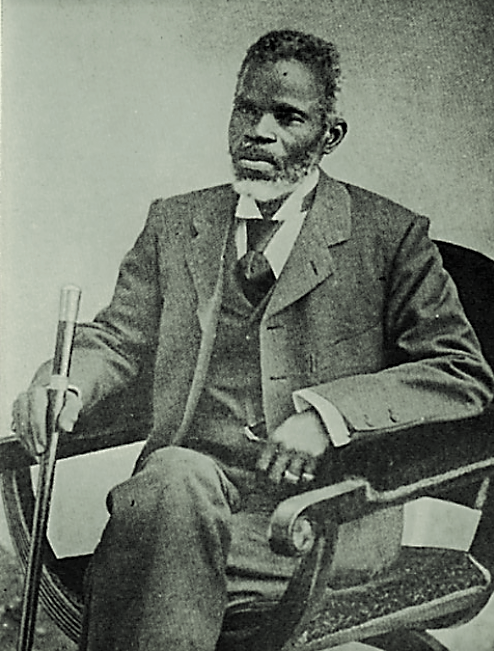
He was born in a fishing village, became the richest African on the Gold Coast, and spent his fortune on one fight: keeping the land in the hands of its people. In 1898 he carried that fight to London, faced the British Colonial Secretary, and won. Almost every acre of customary land in southern Ghana today still carries the mark of that victory.
In this series we usually write about two kinds of people: those history mislaid, and those who did the damage. Jacob Wilson Sey belongs to a third kind: the ones who stood up when it mattered, and won.
He is barely known outside Ghana, and too little known inside it. That is a strange omission, because the question he fought over in 1898 is the question being fought over on the beaches of Accra in 2026: who owns Africa's land, the people who have always held it, or the state that claims it?
From a fishing village to the first fortune
Jacob Wilson Sey, known among his own people as Kwaa Bonyi, was born on 10 March 1832 in a Fante fishing village on the Gold Coast. Nothing about his birth suggested what he would become.
He rose through trade to become the first recorded African multi-millionaire on the Gold Coast, a man whose wealth was built inside the colonial economy rather than handed to him by it. He had two brothers, Joseph Ewusi and Kwabena Wilson-Sey. By the end of his life, he was addressed as Jacob Wilson-Sey, Esquire.
Wealth like that, in colonial times, usually came with an unspoken bargain: keep your head down and keep your fortune. Sey did the opposite.
The land grab that was dressed as law
In the 1890s, the British colonial government set out to change who owned the Gold Coast.
First came the Crown Lands Bill of 1896, then the Lands Bill of 1897. Their purpose was simple, even if the language was not: all so-called "unused" or "waste" land would be placed under the control of the colonial government.
What "waste land" really meant. In African land law, land that is not farmed this year is not ownerless. It is fallow land, forest held for the next generation, land kept for hunting, for herbs, for the shrines, for the family not yet born. To a colonial administrator, land without a crop on it looked empty. To the people who held it, it was the future.
Had the bills passed, enormous parts of the Gold Coast would have become Crown property overnight, by a stroke of a pen in a building the owners had never entered.
Cape Coast, 1897: the society is born
The resistance began in Cape Coast, the intellectual centre of the colony. In May 1897, a meeting of the African educated class, merchants and chiefs turned into something new: the Gold Coast Aborigines' Rights Protection Society, the ARPS.
Its first task was almost modest. It set out to make sure that every person understood what the Lands Bill actually said. Then it argued its case before the Legislative Council, and in its own newspaper, the Gold Coast Aborigines.
Sey was not a bystander. He was a co-founder, an architect of the society and, crucially, its financier. He became its president. Beside him stood the lawyer John Mensah Sarbah, the legal mind of the movement.
The Empire had soldiers and laws. The Gold Coast had arguments, and a man rich enough to carry them to London.
London, 1898
The Crown Lands Bill is proposed: land not occupied or cultivated would pass to the Crown.
The Lands Bill follows. In May, the Aborigines' Rights Protection Society is founded in Cape Coast to oppose it.
An ARPS delegation, led by its president Jacob Wilson Sey, leaves for London. Merchants as well as members of the educated elite travel with it.
The delegation puts its case before the Secretary of State for the Colonies, Joseph Chamberlain. It returns with the assurance that native law will remain and prevail in matters of land.
The Lands Bill is withdrawn. Customary land ownership survives across the Gold Coast.
Think about what that meant. An African merchant, born in a fishing village, walked into the heart of the largest empire on earth and told its government it could not have his people's land. And the government backed down.
What he won, and what it still means
The victory of 1898 is the reason land in southern Ghana is still largely held by stools, skins, families and clans, and not by the state. Every customary land transaction in Ghana today, every lease from a traditional authority, rests on the principle Sey defended: native law prevails in matters of land.
It also did something beyond land. The ARPS became the first great organised voice of the Gold Coast against colonial rule. It proved that the colonial government could be challenged, argued with and beaten by Africans using the Empire's own institutions. The nationalist movement that brought independence in 1957 grew from that soil.
2026: the question returns
On 2 October 2026, soldiers and police flattened the beachfront at La in Accra before dawn. The land, the state now argues, is covered by a law of 2020 that vests the foreshore in the President, and by a government acquisition said to date from 1967. The people of La answer that the land is theirs, that the hotels standing on it are tenants holding leases, and they have gone to court.
The idea that the shore belongs to the state does not come from Ga or Fante custom. It comes from English common law, where the foreshore has traditionally belonged to the Crown. The same legal tradition Sey faced in London.
In 1898, the claimant was the British Crown, and Jacob Wilson Sey stopped it. In 2026, the claimant speaks for the Republic of Ghana, a state whose borders and legal system were themselves inherited from colonial rule. The question Sey answered has come back in a new uniform.
What the British Empire could not take from the Gold Coast in 1898, an independent Ghana should not take in 2026.
Why he belongs on this site
Because African independence is not only about the day the flag changes. It is about who controls the land, the minerals, the shore and the future. Jacob Wilson Sey understood that sixty years before Ghana's independence, and he won that fight when almost nobody believed an African could.
Mobutu, also in this series, is the story of an independence sold off the moment it was won. Sey is the opposite: a sovereignty defended before the word independence was even spoken.
He died on 22 May 1902. The land he defended is still being fought over. It is time his name was spoken as loudly as the question he answered.
More in this series and across the network
- Jacob Wilson Sey: the Fante millionaire who challenged Empire and saved the land
- The Aborigines' Rights Protection Society: guardians of land, law and identity
- Jacob Wilson Sey: the bullet-proof spirit of a Fante legend
- They Made Ghana: Jacob Wilson Sey
- Who owns the shore? La, the land, and a Republic built on colonial law
- Mobutu Sese Seko: the man who killed African independence
- Anton Wilhelm Amo: an African philosopher in Enlightenment Europe
Verified: 22 October 2026.
Compiled from published histories of the Gold Coast Aborigines' Rights Protection Society and of Jacob Wilson Sey, including accounts of the Crown Lands Bill of 1896, the Lands Bill of 1897, the founding of the ARPS in Cape Coast in 1897 and the delegation that left for London on 24 May 1898 to meet Colonial Secretary Joseph Chamberlain. Sey's dates of birth (10 March 1832) and death (22 May 1902) and his roles in the ARPS are as recorded. His exact place of birth is given only as a Fante fishing village, as the sources consulted do not name it. The account of the 2026 La land dispute is drawn from published Ghanaian reporting, and the opinions expressed in the final sections are the author's own.
"The one who tells the truth is never loved at first."
Common in: Various African oral traditions.
Meaning: Speaking truth often brings discomfort, criticism, or isolation before it earns respect. Truth is valuable not because it is pleasant, but because it is necessary.
Discover More
This remarkable story is only one chapter in the long and often forgotten history of Africa's connections with the wider world. Explore more articles on African kingdoms, Pan-African history, global cultural exchanges and the extraordinary individuals whose lives linked Africa with Europe, Asia and the Americas. Every story opens another door into Africa.