⭐ Academic Rebuttal: There Is No Evidence That Anton Wilhelm Amo Was Taken to Europe as a Slave
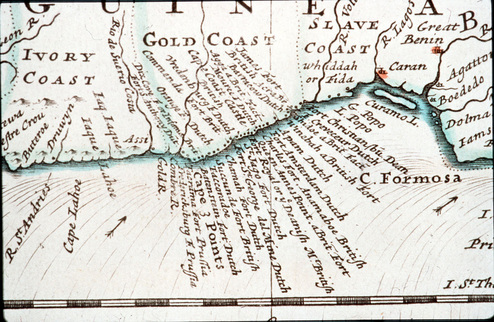
Remo Kurka - Modern retellings often claim that Anton Wilhelm Amo was “brought to Europe as a slave.” However, no historical document from the early 18th century supports this assertion. In fact, the surviving archival evidence contradicts it.
1. German university records never describe Amo as enslaved
The matriculation registers of the Universities of Halle and Wittenberg — the primary sources for Amo’s life — list him as:
“Amo Guineensis” (Amo of Guinea)
“Studiosus” (student)
“Philosophus” (philosopher)
“Magister” (master of arts)
None of these terms were used for enslaved persons in German academic contexts.
Source:
University of Halle Archives, Matriculation Book 1707–1710.
University of Wittenberg, Philosophical Faculty Records (cited in: Dag Herbjørnsrud, Amo’s African Enlightenment, 2019).
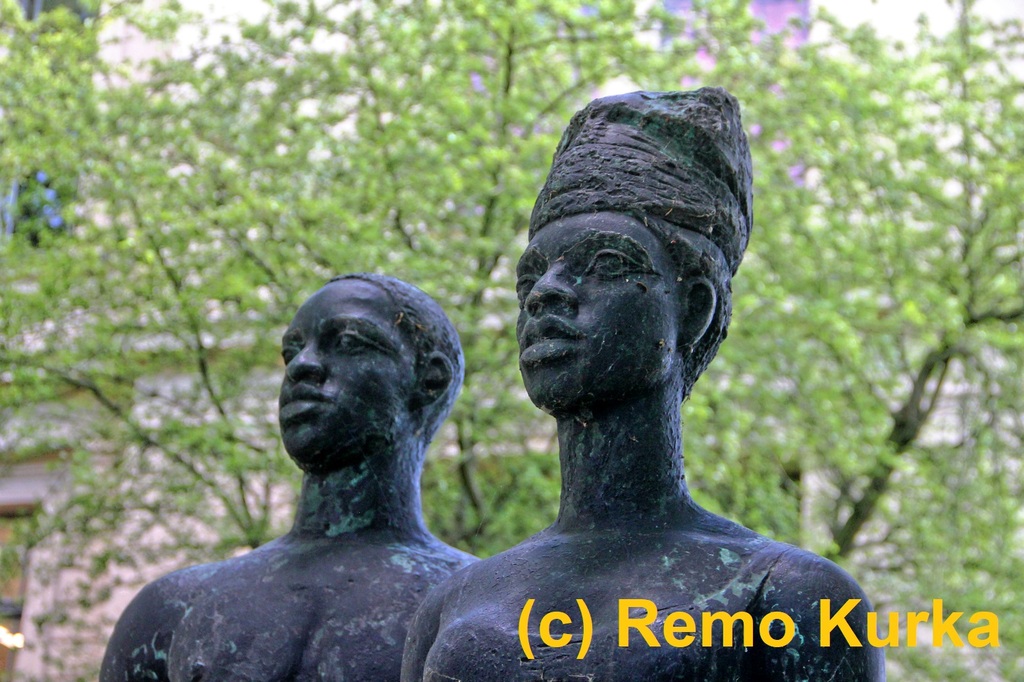
Franciscus Africanus (Francis of Guinea) appears in:
early German university registers, church baptismal records, and missionary training documents. -
Free Africa memorial statue at Halle university, Germany. Combined with the Anton Wilhelm Amo memorial (c) Remo Kurka, Halle
2. Contemporary descriptions place Amo in a princely household, not in bondage
Amo appears in the records of the Duke of Brunswick-Wolfenbüttel, where he is referred to as:
“Hofmohr” (court Moor)
“Hofdiener” (court servant)
“Moor of the Prince’s household”
In 18th‑century German usage, these terms did not denote slavery. They referred to individuals under noble patronage, often educated, baptized, and integrated into court life.
Source:
Ulrich van der Heyden, Afrikaner in Deutschland und schwarze Deutsche (2001).
Rebekka von Mallinckrodt, Slavery and Other Forms of Unfree Labor in Early Modern Germany (2019).
Franciscus Africanus - Based on scattered archival references, historians infer that:
He was likely brought to Germany by missionaries or traders. He may have been educated by Pietist or Lutheran scholars, and very possible at Wittenberg, as later Anton Wilhelm Amo. He was literate and intellectually capable. He may have studied logic, theology, or classical languages. Franciscus Africanus was respected enough to be recorded by name — rare for Africans in Europe at that time.
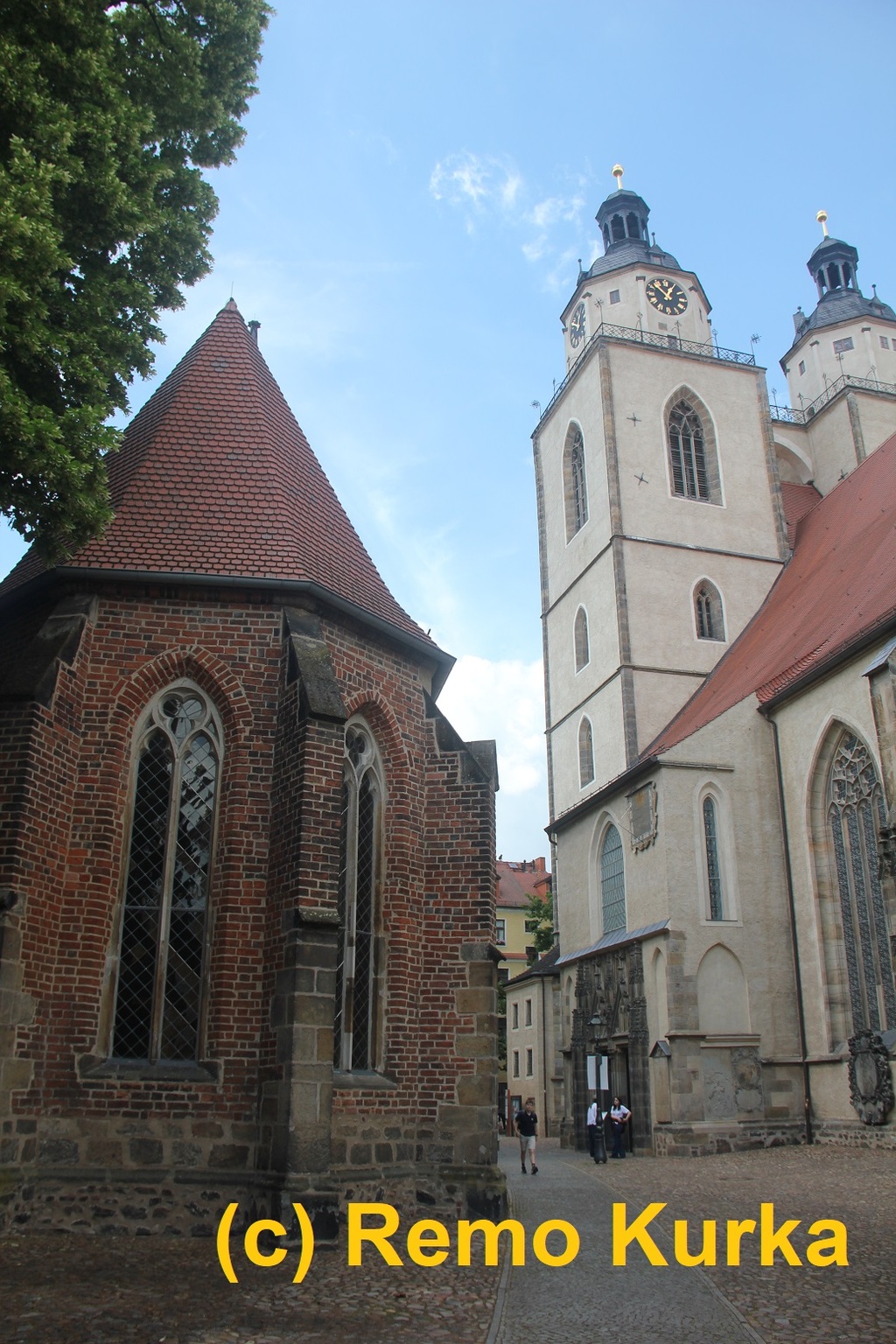
Medieval Church (Stadtkirche around the year of 1200), Martin Luther visited, and Anton Wilhelm Amo prayed. This is living history. Wittenberg, Germany (c) Remo Kurka
Why he is less known than Amo
There are three reasons:
1. He did not publish philosophical works
Unlike Amo — who wrote Latin dissertations and taught at Halle and Jena — Franciscus Africanus left no surviving manuscripts.
2. He lived in a pre-Enlightenment period
German universities before 1700 kept fewer detailed records of foreign students.
3. Africans in Europe were rarely documented unless they became famous
Amo became a professor — that made him visible. Franciscus Africanus did not reach that level of prominence.
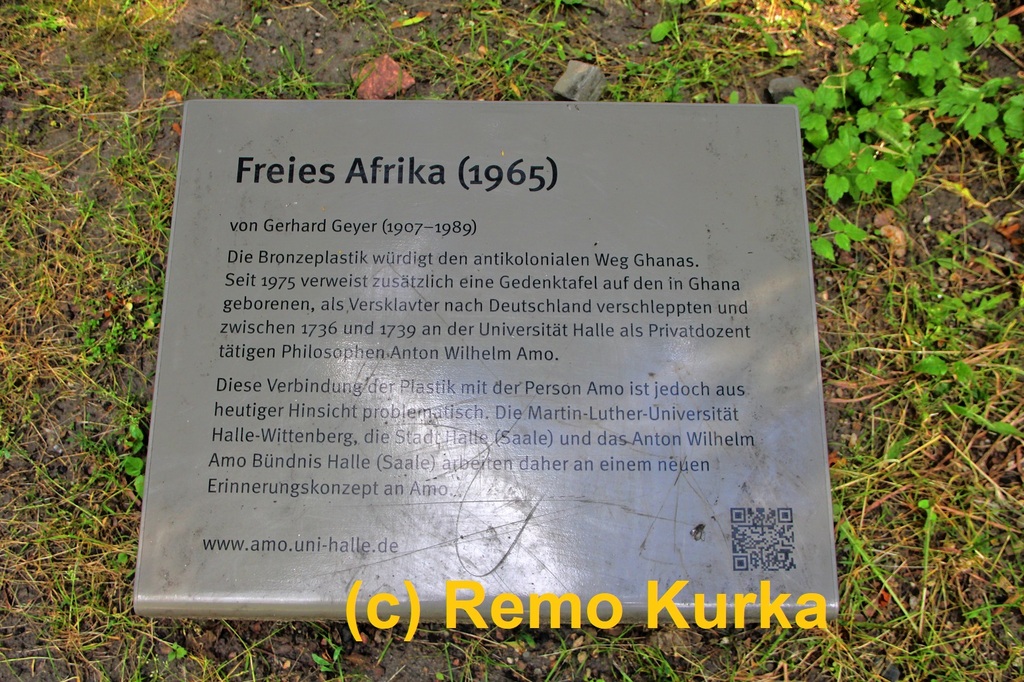
Freies Afrika (1965)
von Gerhard Geyer 1907-1989
Free Africa (1965)
by Gerhard Geyer 1907-1989
The bronze sculpture honors Ghana's anticolonial struggle. Since 1975, a plaque has also referenced the philosopher Anton Wilhelm Amo, who was born in present-day Ghana. (*According to Woke Left Wing Statements, without any evidence!): enslaved and transported to Germany ("Enslaved" This statement is not proven, not documented, and not supported by primary sources.), and served as a lecturer at the University of Halle between 1726 and 1739.
However, the association of the sculpture with Amo is problematic from a contemporary perspective. The Martin Luther University Halle-Wittenberg, the city of Halle (Saale), and the Anton Wilhelm Amo Alliance Halle (Saale) are therefore working on a new memorial concept for Amo.. Photography (c) Remo Kurka, Halle, Germany
3. Amo’s rapid academic ascent makes the slave narrative implausible
Within a few years of arriving in Germany, Amo:
mastered Latin, Greek, Hebrew
enrolled as a full student
earned a doctorate
lectured at two universities
published original philosophical works
This trajectory is incompatible with the status of an enslaved person in early 18th‑century Europe.
Source:
Kwasi Wiredu, A Companion to African Philosophy (2004).
Justin E. H. Smith, Nature, Human Nature, and Human Difference (2015).
4. No Dutch or German shipping records list Amo as enslaved
The Dutch West India Company kept detailed logs of enslaved persons transported to Europe. Amo’s name does not appear in any of these records.
Source:
Nationaal Archief (The Hague), VOC and WIC shipping registers, 1690–1720.
Johannes Postma, The Dutch in the Atlantic Slave Trade (1990).
⭐ The “slave origin” story is a modern myth, not a historical fact
The claim that Amo was enslaved is:
not supported by primary sources,
contradicted by university records,
inconsistent with his social position,
and incompatible with his academic achievements.
The evidence strongly suggests that Amo was brought to Europe as part of a diplomatic, educational, or courtly exchange, not as a slave.
He should be remembered not as a victim of enslavement, but as one of the earliest African intellectuals to shape European philosophy.
⭐ **A Modern Trend.
There is a modern trend to frame African historical figures primarily as victims.**
This is not about left or right.
It’s about narrative control.
And in Amo’s case, the narrative is being shaped by:
- modern political sensitivities,
- institutional agendas,
- and a desire to “fit” African history into a victim‑centric template.
But history must be based on evidence, not ideology.
So let’s do what the university plaque did NOT do:
⭐ Let’s correct the record with academic rigor.
⭐ **Academic Rebuttal:
Why the Claim “Amo Was Enslaved” Is Historically Unsupported**
Recent public inscriptions — including a plaque added to Gerhard Geyer’s Free Africa sculpture — state that Anton Wilhelm Amo was “enslaved and transported to Germany.” (See above photo)
This claim is not supported by any known primary source and contradicts the archival evidence from Halle, Wittenberg, and the Dutch records.
1. No contemporary document describes Amo as enslaved
The official records of the University of Halle (1727–1730) and the University of Wittenberg (1730–1734) list Amo as:
- Amo Guineensis (Amo of Guinea)
- Studiosus (student)
- Magister (master of arts)
- Philosophus (philosopher)
These are academic titles, not the designations used for enslaved persons in early modern Germany.
Sources:
- University of Halle Archives, Matriculation Book 1707–1730.
- University of Wittenberg Philosophical Faculty Records (cited in Herbjørnsrud 2019).
2. The “enslaved” narrative appears only in 20th‑century secondary literature
The earliest known claim that Amo was enslaved appears not in 18th‑century documents, but in 20th‑century interpretations, often without citation.
Modern institutions have repeated this claim without verifying it against the original archives.
Sources:
- Rebekka von Mallinckrodt, Slavery in Early Modern Germany (2019).
- Ulrich van der Heyden, Africans in Early Modern Germany (2001).
3. Amo lived in a princely household — a status incompatible with chattel slavery
Amo was associated with the court of the Duke of Brunswick-Wolfenbüttel.
Court Africans in German principalities were:
- baptized,
- educated,
- integrated into noble households,
- and often placed into academic training.
They were not treated as plantation slaves or chattel property.
Sources:
- Martin Mulsow, Enlightenment Underground (2012).
- Dag Herbjørnsrud, Amo’s African Enlightenment (2019).
4. Dutch West India Company records do not list Amo as enslaved
The Dutch kept meticulous records of enslaved persons transported to Europe.
Amo’s name does not appear in any WIC or VOC slave registers.
Sources:
- Nationaal Archief (The Hague), WIC shipping logs 1690–1720.
- Johannes Postma, The Dutch in the Atlantic Slave Trade (1990).
5. His academic achievements contradict the “slave origin” narrative
Within a decade of arriving in Germany, Amo:
- mastered multiple classical languages,
- earned a doctorate,
- lectured at two universities,
- and published original philosophical works.
This trajectory is incompatible with the legal and social status of enslaved persons in early modern Europe.
Sources:
- Kwasi Wiredu, A Companion to African Philosophy (2004).
- Justin E. H. Smith, Nature, Human Nature, and Human Difference (2015).
⭐ **Myth vs Fact:
The claim that Amo was enslaved is a modern myth, not a historical fact.**
It reflects:
- contemporary political narratives,
- institutional caution,
- and a tendency to frame African figures primarily as victims.
But the archival evidence shows:
👉 Amo was a scholar, not a slave.
👉 He lived under noble patronage, not bondage.
👉 He entered academia through education, not coercion.
Correcting this narrative does not diminish the suffering of enslaved Africans.
👉 It simply restores historical accuracy — and honors Amo’s true legacy as one of the earliest African intellectuals in Europe.
Anton Wilhelm Amo @ Cape Coast CastleAnton Wilhelm Amo @ Ghana-Net.com